





What's Happening?
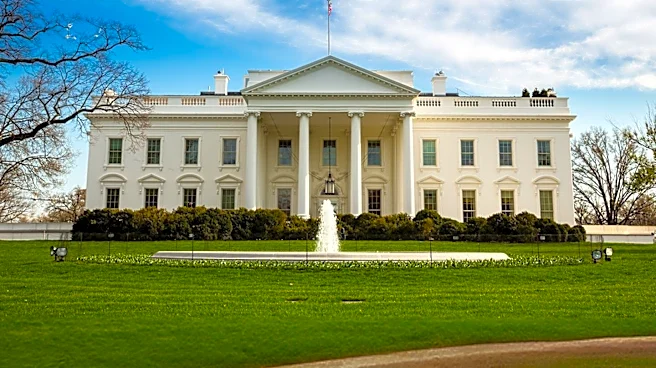
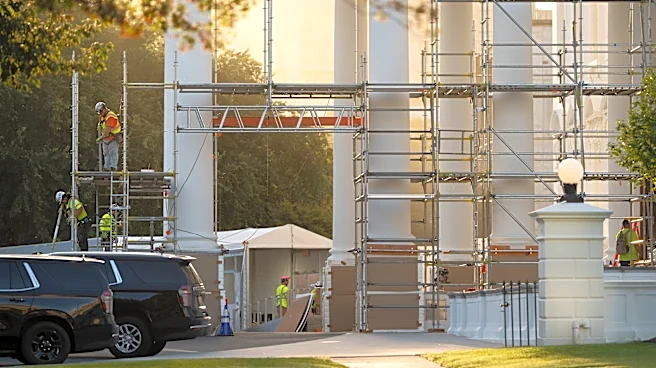
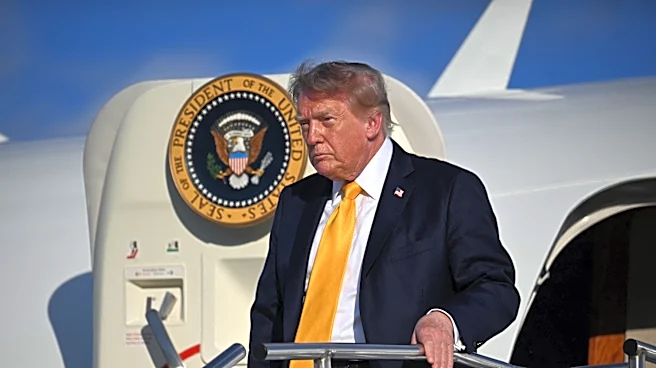
President Trump recently highlighted his tribute to Italian Americans by placing a statue of Christopher Columbus at the entrance of the Eisenhower Executive Office Building, adjacent to the White House. In a post on Truth, President Trump stated that
he wanted this in honor of the Italian-American community, describing them as hardworking, brilliant, and wonderful people, and noted that the gesture was greatly appreciated. U.S. Ambassador to Italy, Tilman Fertitta, echoed this sentiment, expressing gratitude to President Trump. Ambassador Fertitta emphasized that Italian Americans and Italians in Italy deeply appreciate this gesture, viewing the Columbus statue at the Eisenhower Executive Building as a powerful symbol of shared history and heritage between the two nations.
Why It's Important?
President Trump's decision to place the Columbus statue and his subsequent remarks are significant for several reasons. Domestically, it serves as a direct appeal to the Italian-American community, a demographic group that holds cultural and political importance in the United States. Such gestures can influence political sentiment and reinforce cultural identity. Internationally, the endorsement by U.S. Ambassador Tilman Fertitta underscores the diplomatic dimension of this act, linking it to the broader U.S.-Italy relationship. It highlights how cultural symbols can be leveraged in foreign policy to foster goodwill and emphasize shared heritage. The recognition of Italian-American contributions through such a prominent symbol can strengthen cultural ties and mutual understanding between the U.S. and Italy, potentially impacting diplomatic and economic relations.
What's Next?
This gesture is likely to continue to resonate within the Italian-American community and in U.S.-Italy diplomatic circles. It may lead to further discussions or events celebrating Italian-American heritage and the historical ties between the two countries. Political figures may reference this act in future engagements with Italian-American groups. The U.S. Embassy in Italy, under Ambassador Fertitta, may continue to highlight shared cultural symbols and historical connections as part of its public diplomacy efforts. While the immediate impact is symbolic, such actions contribute to the ongoing narrative of cultural appreciation and alliance building, which can have long-term effects on international relations and domestic political dynamics.
Beyond the Headlines
Beyond the immediate political and diplomatic implications, the placement of the Christopher Columbus statue and the subsequent praise from Ambassador Fertitta delve into the complex and often contentious role of historical figures and symbols in contemporary society. While for many Italian Americans, Columbus represents heritage and exploration, for others, particularly Indigenous communities, he symbolizes colonization and oppression. President Trump's emphasis on the positive aspects of Columbus's legacy, and the ambassador's affirmation, highlight a particular interpretation of history that may not be universally shared. This situation underscores the ongoing cultural debates in the U.S. about historical memory and representation, and how these debates can intersect with political messaging and international diplomacy. It also reflects how cultural symbols can be powerful tools in shaping national identity and international perceptions, often evoking strong emotions and diverse interpretations.