







What's Happening?
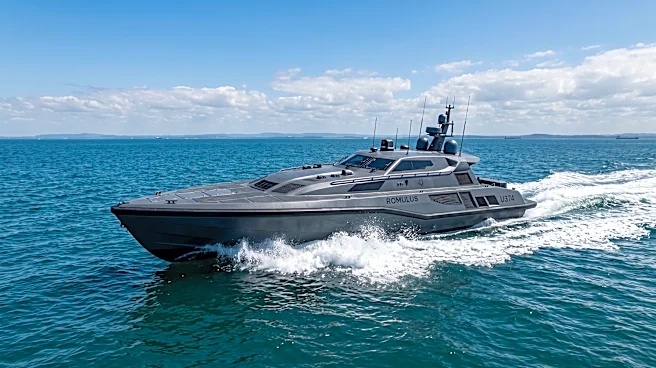
Louisiana Governor Jeff Landry recently participated in a celebration marking the progress of the ROMULUS unmanned surface vessel (USV) production for the U.S. Navy. The event, held in Louisiana, also included Vice Admiral Michael Wosje, Deputy Chief
of Naval Operations for Warfighting Requirements and Capabilities (N9), and the president of HII. This collaboration highlights the state's role in national defense manufacturing and the ongoing development of advanced naval technologies. The ROMULUS USV represents a significant step in modernizing the U.S. Navy's fleet, emphasizing autonomous capabilities in maritime operations. The involvement of state leadership alongside naval and industry figures underscores the strategic importance of this project.
Why It's Important?
The production of the ROMULUS unmanned surface vessel in Louisiana is important for several reasons. It signifies a continued investment in advanced defense technologies, which are crucial for maintaining the U.S. Navy's operational superiority and national security. For Louisiana, this project supports local industry and job creation within the defense sector, contributing to the state's economic stability. The development of USVs like ROMULUS is transforming naval warfare, offering capabilities for surveillance, reconnaissance, and other missions with reduced risk to human personnel. This initiative also strengthens the partnership between the federal government, the U.S. Navy, and private industry, fostering innovation and technological advancement in defense manufacturing.
What's Next?
The ongoing production of the ROMULUS unmanned surface vessel indicates a continued focus on integrating autonomous systems into the U.S. Navy's operations. Future developments will likely involve further testing, refinement, and eventual deployment of these vessels. The success of this project could lead to additional contracts and expanded manufacturing efforts in Louisiana, further solidifying the state's position as a key contributor to national defense. The U.S. Navy is expected to continue investing in unmanned systems to enhance its capabilities and adapt to evolving global security challenges, potentially influencing future naval procurement strategies and technological advancements.
Beyond the Headlines
The shift towards unmanned surface vessels like ROMULUS has broader implications for naval strategy and international relations. It raises questions about the ethics of autonomous warfare, the legal frameworks governing their use, and their potential impact on global power dynamics. The increased reliance on such technology could lead to a re-evaluation of naval personnel roles and training, emphasizing technical expertise in operating and maintaining these advanced systems. Furthermore, the development of these vessels could spur an arms race in autonomous maritime technology among global powers, necessitating new international agreements and cooperation to manage their proliferation and use.