



What's Happening?
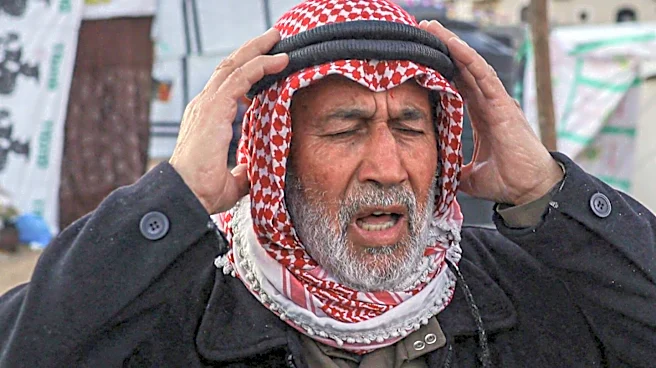
Loui Ridi, an Ohio-based Palestinian American, has returned to his home in the occupied West Bank village of Qusra after it was besieged by Israeli settlers for over a week. Ridi traveled from the U.S. to join his brother, Qusai Abu Rida, and his teenage
son, who had remained inside the house to protect the property. The standoff in Qusra involves groups of settlers surrounding several Palestinian homes, preventing residents from leaving. The United States has condemned the siege, and the Israeli military has deployed troops to the area, stating their purpose is to maintain order. However, Ridi's brother's footage from Monday showed soldiers interacting amicably with settlers. Ridi expressed his frustration, stating, "I should be able to go to my house freely, anytime I want. It is a frustration and a nightmare for the entire family." The neighborhood where Ridi's home is located has been declared a closed military zone by Israel.
Why It's Important?
This incident highlights the escalating tensions and violence in the occupied West Bank, directly impacting U.S. citizens of Palestinian descent. The siege of a Palestinian American's home by Israeli settlers, despite U.S. condemnation, underscores the complex diplomatic challenges faced by the U.S. in the region. It also brings to the forefront the vulnerability of Palestinian property rights and personal safety amidst increased settler activity, which has been emboldened by Prime Minister Benjamin Netanyahu's right-wing government. The involvement of a U.S. citizen elevates the issue to a matter of consular concern and potentially influences U.S. foreign policy discussions regarding aid to Israel and the protection of human rights in the Palestinian territories. The perceived inaction or complicity of Israeli soldiers, as suggested by the footage, further complicates the narrative and could fuel international criticism, potentially affecting U.S. standing in the Middle East and its efforts to promote stability in the region.
What's Next?
The immediate future for Loui Ridi and his family involves continuing to defend their home in Qusra, potentially under the ongoing presence of Israeli military forces and settlers. The declaration of the area as a closed military zone suggests continued restrictions on movement and access. Diplomatically, the U.S. State Department may face increased pressure to intervene more forcefully to protect its citizens and de-escalate the situation. This incident could lead to further U.S. diplomatic statements or actions, potentially including calls for investigations into settler violence and the conduct of Israeli forces. On the ground, the situation remains volatile, with the potential for further clashes between settlers, Palestinians, and Israeli security forces. The long-term implications could include increased international scrutiny of Israeli settlement policies and human rights in the West Bank, potentially influencing future peace negotiations or international aid decisions.
Beyond the Headlines
The siege of Loui Ridi's home transcends a simple property dispute, touching upon deeper issues of identity, displacement, and the psychological toll of conflict. For Palestinian Americans, this event underscores the precariousness of their ancestral land and the challenges of maintaining connections to their heritage amidst ongoing geopolitical strife. The act of returning to physically defend one's home, despite the risks, speaks to a profound sense of belonging and resistance against perceived injustice. This situation also highlights the broader legal and ethical complexities of land ownership in occupied territories, where international law often conflicts with on-the-ground realities and national policies. The emotional impact on families like Ridi's, who are forced to live under constant threat and uncertainty, represents a significant human cost of the conflict, often overlooked in broader political discussions. It also raises questions about the responsibilities of governments to protect their citizens abroad, particularly when those citizens are caught in long-standing international disputes.