
What's Happening?
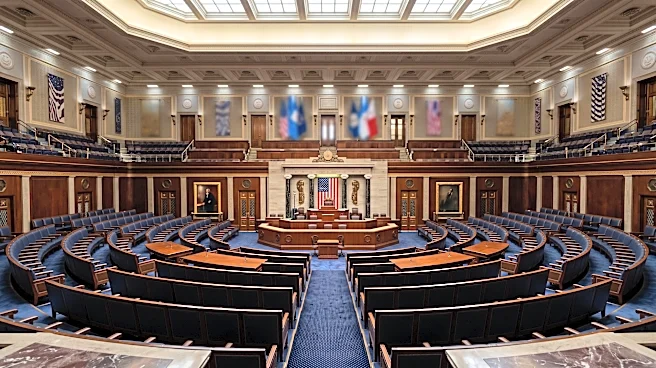
House Republicans have affirmed their intention to remain in Washington to complete their legislative responsibilities for September, pushing back against suggestions of an early recess. Representative
Mike Simpson (R-Idaho) confirmed that the party intends to finish outstanding legislative tasks. The focus will be on 'must-pass' measures, such as the annual defense policy bill. More contentious issues, including proposals related to AI data centers, are unlikely to be addressed before the end of the year. While some dissent exists within the conference regarding the duration of the session, GOP leadership is prioritizing essential bills and deferring broader, potentially divisive debates for a later time.
Why It's Important?
This decision by House Republicans highlights the legislative priorities and internal dynamics within the party. By committing to complete 'must-pass' bills, they aim to ensure the continuity of essential government functions, such as national defense. The postponement of the AI data center debate signifies a strategic choice to avoid potentially divisive issues that could hinder progress on more immediate legislative requirements. This approach reflects the challenges of governing with a narrow majority and the need to manage internal disagreements. The delay in addressing AI data center regulations could have implications for the rapidly evolving technology sector, as the lack of clear guidelines might affect investment, development, and ethical considerations surrounding artificial intelligence infrastructure in the U.S.
What's Next?
House Republicans will proceed with their legislative agenda, focusing on time-sensitive bills like the annual defense policy bill. The debate surrounding AI data centers is expected to be revisited at a later date, likely in the next legislative session or after the current year. This postponement will allow for more thorough discussion and potential consensus-building on a complex and rapidly evolving technological issue. Stakeholders in the technology industry, particularly those involved in AI development and data management, will likely continue to advocate for their interests and provide input as lawmakers prepare to address these regulations. The delay also provides an opportunity for further research and public discourse on the implications of AI data centers.
Beyond the Headlines
The decision to defer the AI data center debate underscores a broader challenge facing policymakers: how to regulate rapidly advancing technologies. The complexity of AI, its ethical implications, and its potential economic impact require careful consideration, which often clashes with the fast pace of legislative cycles. This postponement could be seen as an acknowledgment of the need for more comprehensive understanding and stakeholder engagement before enacting significant regulations. It also reflects the growing influence of technology on policy agendas, as issues like AI data centers move from niche discussions to central legislative concerns. The eventual debate will likely shape the future landscape of AI development and deployment in the U.S., impacting innovation, privacy, and national security.