








What's Happening?
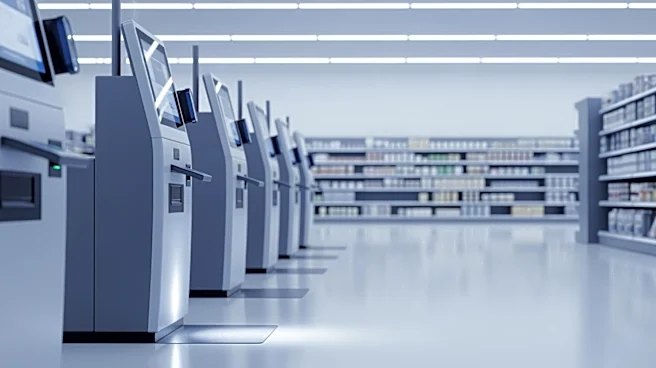
Connecticut lawmakers are deliberating a bill that aims to regulate the use of self-checkout systems in grocery stores. The proposed legislation seeks to cap the number of self-checkout machines to eight per store and mandates one staffed checkout lane
for every two automated stations. Additionally, it requires one employee for every two machines. This move is intended to improve customer service and worker protections, but it could lead to increased operational costs for stores and limited services for shoppers. The bill is part of a broader trend where some jurisdictions, like Long Beach, California, have implemented similar regulations, resulting in higher labor costs and reduced self-checkout options.
Why It's Important?
The proposed legislation in Connecticut could significantly impact grocery store operations and consumer experiences. By imposing strict limits on self-checkout systems, the bill may increase labor costs for stores, potentially leading to higher prices for consumers and longer wait times at checkout. The regulation also touches on labor issues, as it would require nonunion stores to adopt union policies, potentially affecting staffing flexibility and operational efficiency. The bill's impact on vulnerable populations, such as seniors and individuals with disabilities, is also a point of contention, with some arguing that self-checkout provides essential accessibility and independence.
What's Next?
If passed, Connecticut would be the first state to implement such stringent self-checkout regulations statewide. The bill's progress will be closely watched by other states considering similar measures, such as Massachusetts and Rhode Island. Retailers may need to adjust their operations to comply with the new rules, potentially reducing the number of self-checkout stations or limiting their use. The outcome of this legislative effort could set a precedent for other jurisdictions and influence future discussions on automation and labor policies in the retail sector.
Beyond the Headlines
The debate over self-checkout regulations highlights broader issues of automation in the workforce and the balance between technological convenience and labor rights. As automation continues to evolve, policymakers must consider the implications for employment, consumer choice, and accessibility. The Connecticut bill underscores the tension between maintaining traditional labor practices and embracing technological advancements that can streamline operations and enhance customer experiences.