
What's Happening?
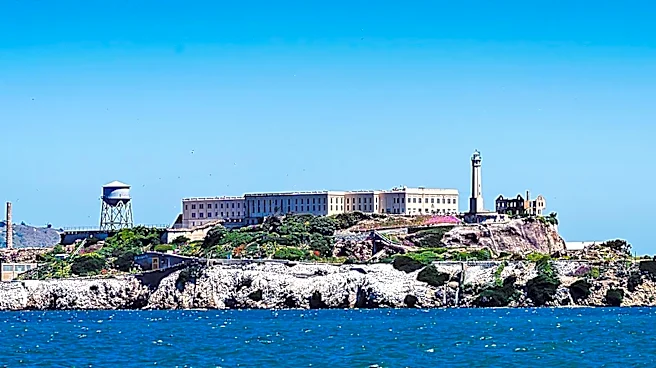
Alcatraz Island, historically known as 'La Isla de los Alcatraces' (Island of the Pelicans), has transitioned from a notorious federal penitentiary to a significant historical landmark managed by the National
Park Service. The former prison, which closed in 1963, is now a major tourist attraction within the Golden Gate National Recreation Area. Visitors can explore the island and its facilities, including the cell house where infamous figures like Al Capone were incarcerated. The site offers an immersive experience into the history of American corrections, with an audio tour featuring accounts from former guards and prisoners. Due to high demand, tickets for ferry departures from Pier 33 in San Francisco must be booked weeks or even months in advance. It is crucial for visitors to understand that Alcatraz is exclusively a federal historic site and not a private entertainment venue or an active correctional facility.
Why It's Important?
The preservation and public access to Alcatraz Island are vital for understanding a unique chapter in U.S. penal history and its broader societal implications. As a National Park Service site, it serves as an educational resource, allowing the public to learn about the evolution of the American justice system and the lives of both inmates and staff. The island's transformation from a symbol of punishment to a historical and cultural landmark highlights a shift in how the nation views its past. Its popularity as a tourist destination also contributes to the local economy of San Francisco, drawing visitors from around the world. The careful management by the National Park Service ensures that the historical integrity of the site is maintained while providing an accessible and informative experience for the public.
What's Next?
Future efforts will likely focus on continued preservation of the historical structures and ongoing educational programming to enhance the visitor experience. The National Park Service will continue to manage the site, balancing the high demand for tourism with the need to protect the island's delicate ecosystem and historical artifacts. There may be further development of interpretive exhibits and digital resources to reach a wider audience, ensuring that the stories of Alcatraz remain accessible. Additionally, the site will continue to serve as a point of interest for various events, such as the recent swim fundraiser for Usher Syndrome, further integrating its historical significance with contemporary community engagement.
Beyond the Headlines
The enduring fascination with Alcatraz Island extends beyond its historical facts, touching upon themes of justice, punishment, and the human spirit. The island's isolation and the harsh conditions of the prison have become a powerful metaphor in popular culture, symbolizing the ultimate consequence for those who defy the law. The stories of inmates like Al Capone, who experienced a significant decline in health and influence during his time there, underscore the psychological and physical toll of incarceration. Alcatraz also represents the government's assertion of control over even the most powerful criminals, demonstrating that no individual was above the reach of federal law. Its continued existence as a public site encourages reflection on the effectiveness and ethics of past penal practices and their legacy in modern society.