
What's Happening?
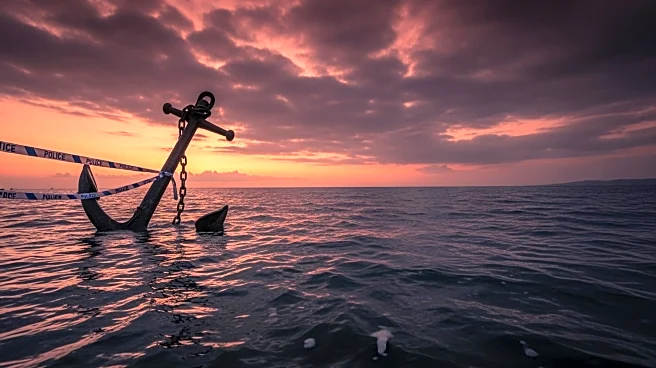
Several marine insurers, including Gard, Skuld, NorthStandard, the London P&I Club, and the American Club, have announced the cancellation of war risk coverage for ships operating in Iranian waters and the Gulf. This decision, effective from March 5,
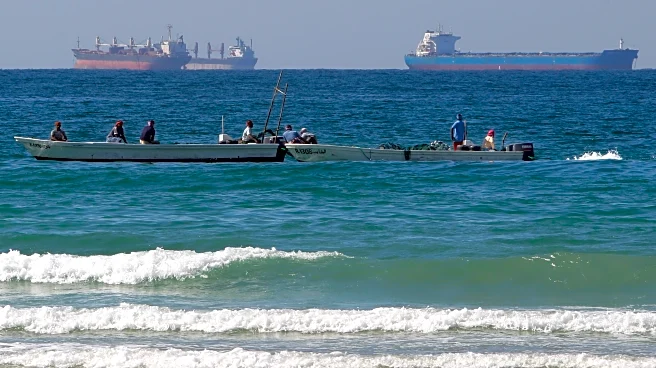
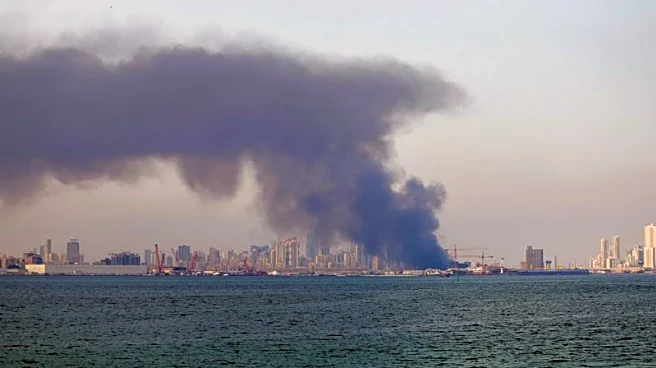
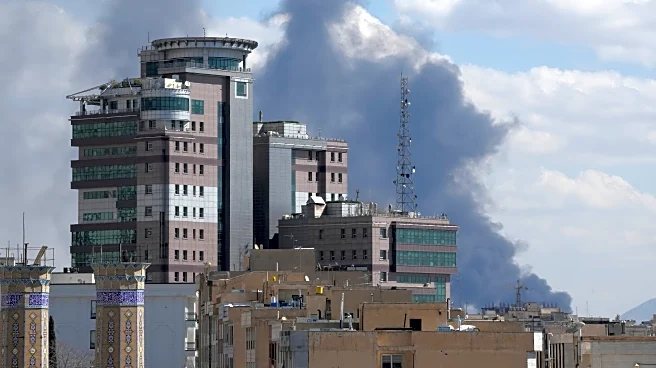
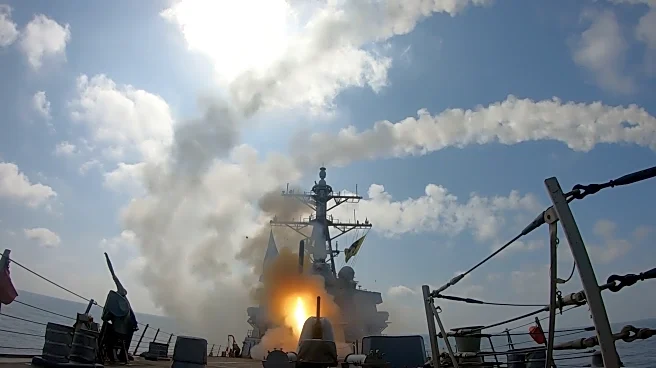
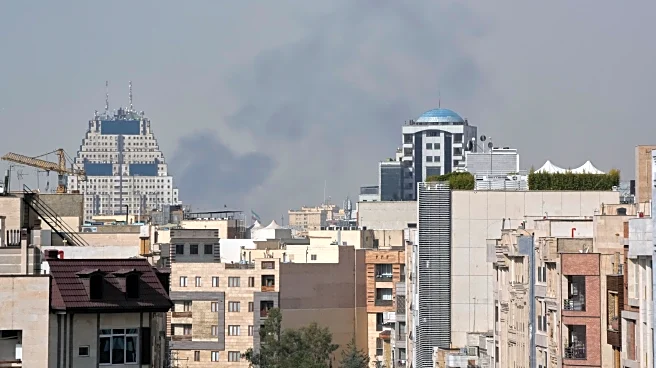
follows heightened tensions in the Middle East after U.S. and Israeli forces launched strikes on Iran. In response, Iran has closed navigation through the Strait of Hormuz, a critical passage for global oil and gas shipments. The situation has led to a suspension of crude, fuel, and liquefied natural gas shipments by several tanker owners and oil companies. Satellite data indicates a significant accumulation of vessels near key ports in the United Arab Emirates, with over 150 tankers anchored in the Gulf waters.
Why It's Important?
The cancellation of war risk coverage by major insurers highlights the escalating geopolitical tensions in the Middle East and their impact on global trade. The Strait of Hormuz is a vital chokepoint for the world's oil supply, and disruptions here can have significant implications for global energy markets. The insurance cancellations could lead to increased shipping costs and delays, affecting oil prices and supply chains worldwide. This development underscores the vulnerability of global trade routes to regional conflicts and the potential economic fallout from such disruptions.
What's Next?
As tensions continue, stakeholders in the shipping and energy sectors will likely seek alternative routes or risk mitigation strategies. The insurance industry may explore new coverage options or adjust premiums to account for the increased risk. Governments and international bodies might engage in diplomatic efforts to de-escalate the situation and ensure the safe passage of vessels through the Strait of Hormuz. The ongoing conflict could also prompt discussions on the diversification of energy sources and routes to reduce dependency on this critical passage.