






What's Happening?
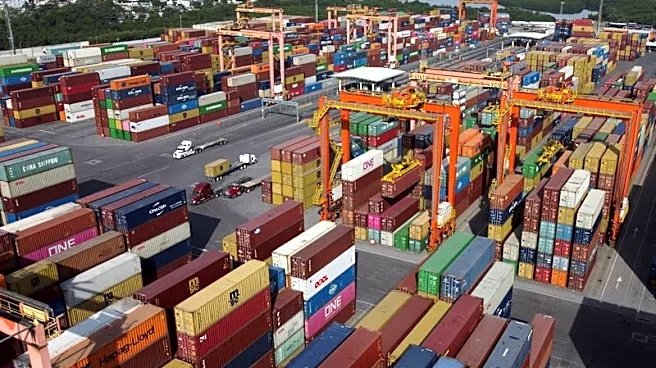
China is soliciting opinions from companies, business associations, and local governments on proposed reciprocal tariff cuts with the United States, affecting approximately $30 billion in trade. This initiative follows a trade truce reached last year,
with both nations agreeing to establish a Board of Trade to explore tariff reductions. The Chinese commerce ministry has indicated that agricultural products will be included in the tariff cut framework. Both countries are working towards finalizing specific arrangements to expand bilateral trade, with the U.S. also seeking public input on the matter.
Why It's Important?
The proposed tariff cuts between China and the U.S. represent a significant step towards easing trade tensions between the two largest economies. Reducing tariffs could enhance trade relations, benefiting industries reliant on cross-border commerce. For U.S. businesses, particularly in agriculture, this could mean increased market access and reduced costs, potentially boosting exports. Conversely, Chinese companies could benefit from lower import costs and improved competitiveness in the U.S. market. The move could also set a precedent for future trade negotiations, influencing global trade dynamics and economic policies.
What's Next?
As both countries work towards finalizing the tariff reduction framework, stakeholders in various industries will likely monitor developments closely. The implementation of these cuts could lead to increased lobbying efforts from sectors seeking favorable terms. Additionally, the success of this initiative may encourage further negotiations on other trade issues, potentially leading to a broader trade agreement. The outcome of these discussions could impact global supply chains and economic strategies, prompting businesses to adjust their operations accordingly.