


What's Happening?
Doctors Without Borders (MSF) has suspended certain medical activities at Nasser Hospital in southern Gaza following reports of armed men within the facility. This decision comes after patients and staff observed masked gunmen in the hospital, raising
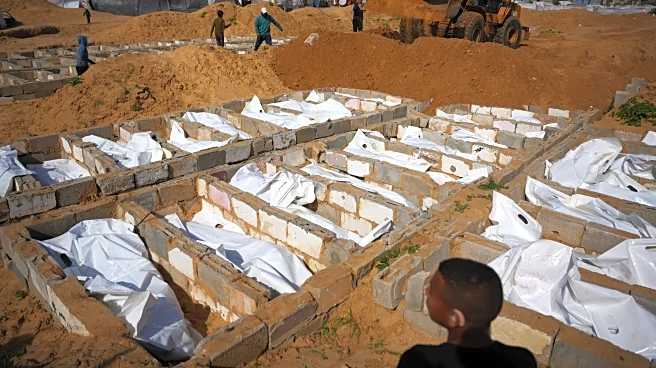
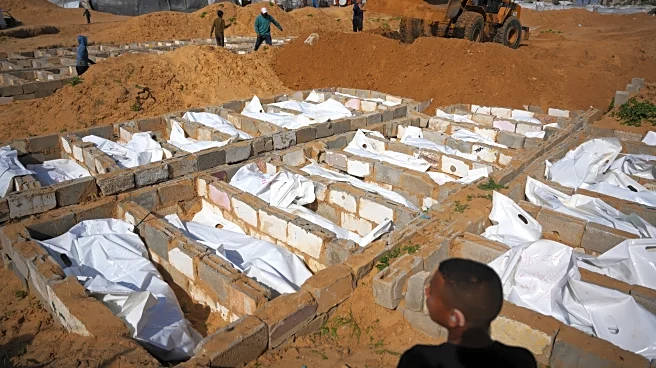
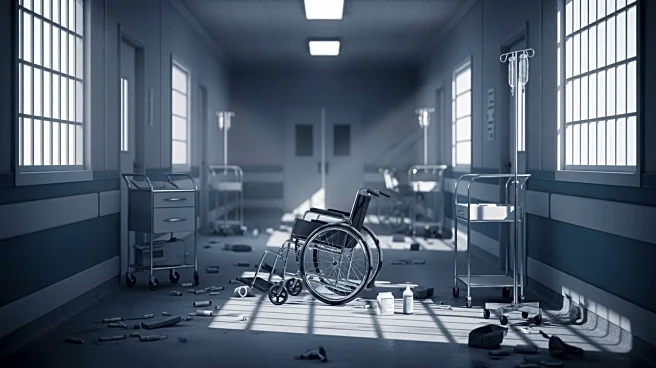
security concerns. Nasser Hospital, a key medical center in the region, has been treating numerous patients, including those injured in the ongoing conflict. The presence of armed individuals and suspected weapons transfers have prompted MSF to halt non-critical operations, although they continue to support essential services such as inpatient and surgical care. The situation highlights the challenges faced by medical facilities in conflict zones, where the neutrality of hospitals is often compromised.
Why It's Important?
The suspension of MSF's operations at Nasser Hospital underscores the precarious state of healthcare in conflict zones like Gaza. Hospitals are supposed to be neutral spaces under international law, but the presence of armed groups can lead to their use for military purposes, which is a violation of these laws. This development could further strain Gaza's already weakened healthcare system, impacting the delivery of critical medical services to civilians. The situation also reflects broader geopolitical tensions, as Israel has accused Hamas of using hospitals for military activities, complicating the humanitarian efforts in the region. The international community's response to such violations could influence future humanitarian operations and the enforcement of international law.
What's Next?
In response to the security breaches, the Hamas-run Interior Ministry has announced plans to deploy police to secure hospitals and remove armed individuals. This measure aims to restore the neutrality of medical facilities and ensure the safety of patients and staff. However, the effectiveness of these efforts remains uncertain, given the complex dynamics of the conflict. International organizations and aid groups may need to reassess their operations and security protocols in Gaza. The ongoing conflict and the fragile ceasefire continue to pose challenges for humanitarian work, and the situation at Nasser Hospital could prompt further international scrutiny and calls for adherence to international humanitarian law.