
What's Happening?
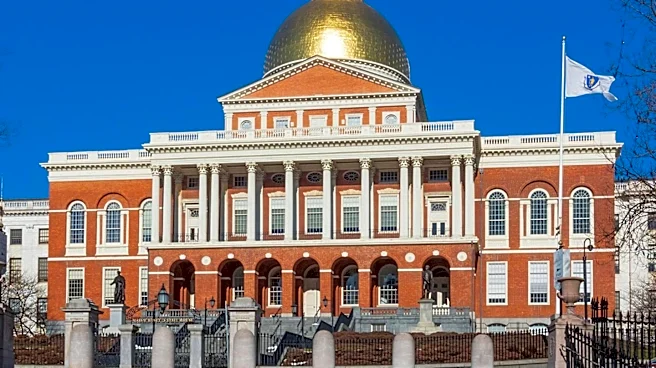
Massachusetts voters have approved several ballot questions, including measures to expand public records access to the State House and governor’s office, and to allow public defenders to unionize. Question
1, which removes public records law exemptions for the State House and governor’s office, passed with over 86% of the vote, enabling the public to request financial documents, correspondence, and contracts from these bodies. Question 2, allowing employees of the Committee for Public Counsel Services (CPCS) to collectively bargain, won with nearly 65% of the vote. This measure empowers public defenders, secretaries, and social workers to form a union and negotiate with the state on issues like work conditions and hours. Additionally, voters supported keeping recreational marijuana sales legal, preserving the 2024 gun control reform law, implementing Election Day registration, and creating a nature conservation fund from sales tax revenue on sporting goods.
Why It's Important?
The approval of these ballot questions signifies a significant shift towards increased transparency and worker rights within Massachusetts state government. The expansion of public records law to include the State House and governor’s office addresses long-standing calls for greater accountability and openness, potentially reducing opportunities for corruption and increasing public trust. The ability for public defenders to unionize is crucial for ensuring fair labor practices and potentially improving the quality of legal representation for low-income clients, as it allows employees to advocate for better pay, job security, and working conditions. These changes reflect a broader trend of voters seeking more direct influence over state governance and policy, impacting how state agencies operate and how public services are delivered. The outcomes demonstrate a public mandate for reforms that enhance democratic participation and protect employee rights.
What's Next?
With the passage of Question 1, the State House and governor’s office will now be subject to public records law, though legislative leaders may introduce legislation to alter the newly passed law before January. For public defenders, the approval of Question 2 means CPCS employees are now empowered to form a union and begin negotiations with the state. This will likely lead to discussions on pay, employment terms, job security, and grievance processes. The implementation of Election Day registration, approved by voters, will begin in 2028 for federal elections, allowing residents to register and vote on the same day at polling places. For municipal elections next year, current registration deadlines will remain. The new nature conservation fund, supported by voters, will be established, with future sales tax revenue from sporting goods directed towards it, contingent on legislative allocation decisions.
Beyond the Headlines
The successful ballot initiatives in Massachusetts highlight a growing public demand for governmental transparency and the empowerment of public sector employees. The overwhelming support for making the State House and governor's office subject to public records law suggests a deep-seated desire among citizens for their elected officials to operate with greater accountability. Similarly, the unionization of public defenders reflects a broader movement to strengthen labor rights and ensure that essential public services are supported by fairly treated workers. These developments could inspire similar movements in other states, fostering a more transparent and equitable public sector. The rejection of efforts to roll back recreational marijuana sales and gun laws also indicates a public preference for maintaining existing progressive policies, showcasing the power of direct democracy in shaping state governance.