





What's Happening?
The International Federation of Red Cross and Red Crescent Societies (IFRC) has established a Group of Friends for the Protection of Humanitarian Personnel. This initiative aims to promote the implementation of the Declaration for the Protection of Humanitarian Personnel,
providing a platform for developing practical policies and practices to support the declaration's objectives. The group serves as a forum for exchanging good practices and connecting with humanitarian organizations. The Secretariat for this group is hosted by the IFRC in Geneva, Switzerland, and operates under the legal framework of the IFRC. It is managed by a small team and reports to a Steering Committee consisting of the Co-Chairs from the Permanent Missions to the United Nations in Geneva of Australia and Jordan, along with the IFRC.
Why It's Important?
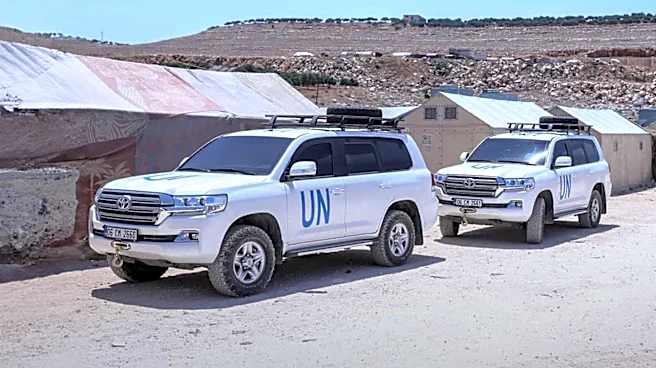
The establishment of the Group of Friends for the Protection of Humanitarian Personnel is significant as it addresses the increasing risks faced by humanitarian workers globally. By promoting the implementation of protective measures, the group aims to enhance the safety and security of personnel engaged in humanitarian missions. This initiative is crucial for ensuring that humanitarian aid can be delivered effectively and safely, especially in conflict zones and areas prone to natural disasters. The collaboration between different nations and organizations under this group highlights a collective commitment to safeguarding those who provide essential services to vulnerable populations.
What's Next?
The Group of Friends is expected to continue developing and refining policies that enhance the protection of humanitarian personnel. As the group gains momentum, it may attract more member states and organizations, broadening its influence and capacity to implement protective measures. The IFRC will likely continue to play a pivotal role in coordinating these efforts, leveraging its global network to ensure widespread adoption of the group's recommendations. Future activities may include workshops, training sessions, and the development of new guidelines to address emerging threats to humanitarian workers.