

What's Happening?
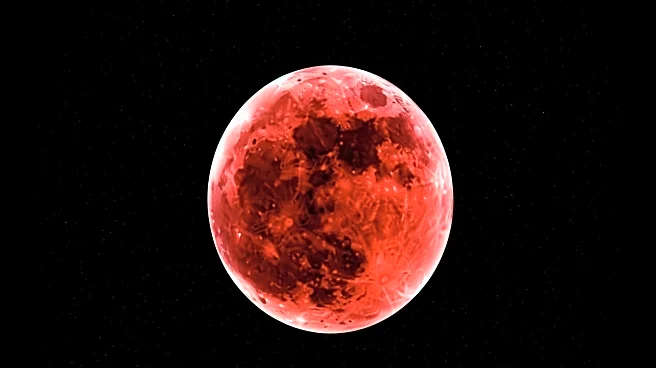
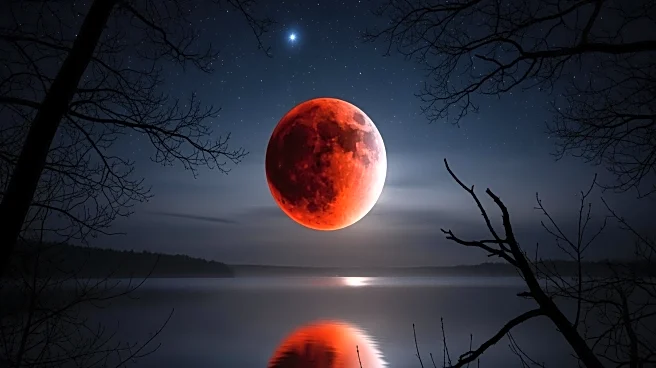
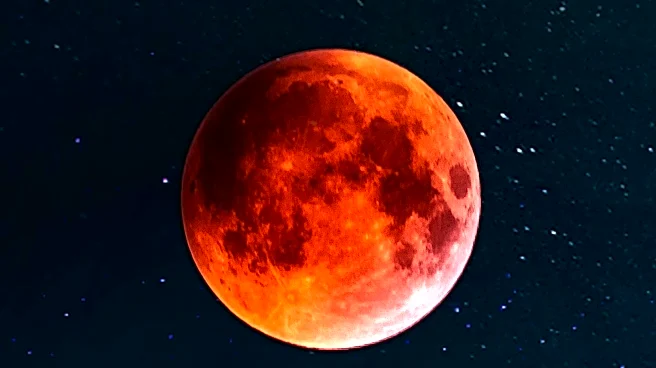
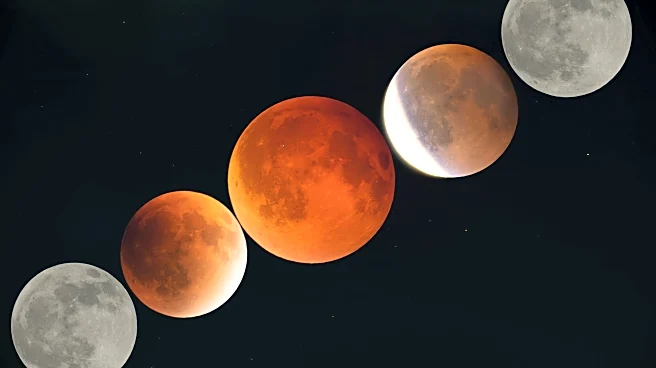
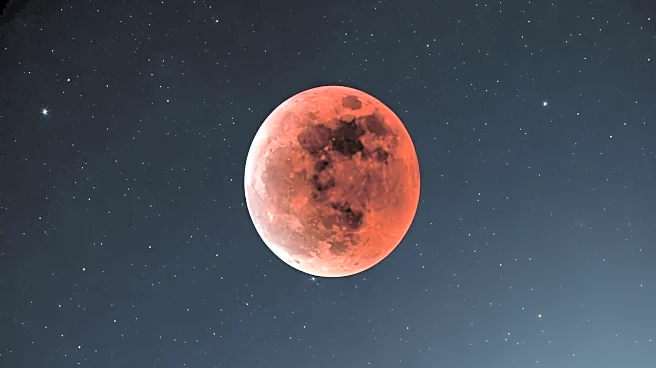
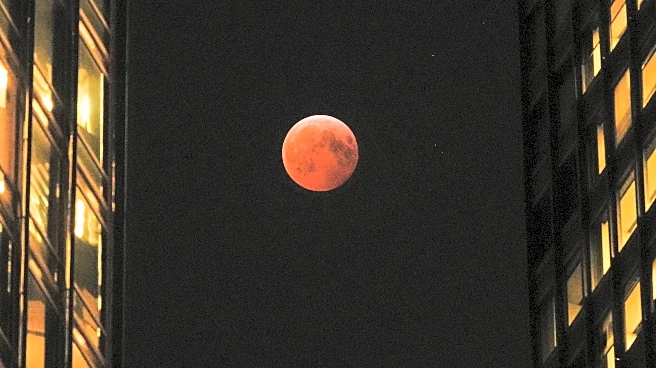
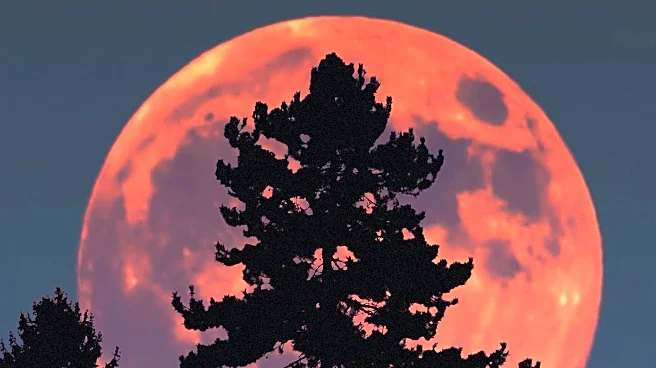
A total lunar eclipse is set to occur, turning the moon a striking blood-red color. This celestial event will be visible on Tuesday morning from North America, Central America, and the western part of South America, while Australia and eastern Asia can
view it Tuesday night. The eclipse results from the Earth aligning between the sun and the full moon, casting a shadow that gives the moon its reddish hue. This phenomenon, known as a 'blood moon,' is part of a series of eclipses, following a recent 'ring of fire' solar eclipse.
Why It's Important?
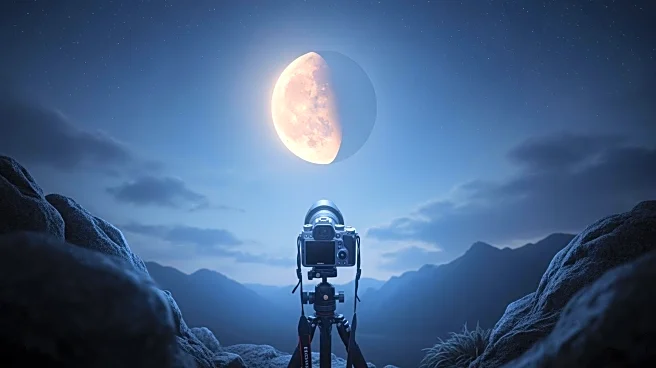
Lunar eclipses are significant astronomical events that offer a unique opportunity for scientific observation and public engagement with space phenomena. The visibility of this eclipse across multiple continents allows a wide audience to experience the event, fostering interest in astronomy and the natural world. Such events also provide educational opportunities, encouraging people to learn more about the mechanics of celestial bodies and their interactions. Additionally, the cultural and historical significance of lunar eclipses, often seen as omens or symbols, adds a layer of intrigue and fascination.
What's Next?
Following this total lunar eclipse, there will be a partial lunar eclipse in August, visible across the Americas, Europe, Africa, and west Asia. These events continue to captivate public interest and provide opportunities for scientific study. Observatories and educational institutions may host viewing events or provide resources to help the public understand and appreciate these phenomena. The ongoing series of eclipses highlights the importance of celestial events in both scientific research and cultural traditions, encouraging continued exploration and appreciation of the universe.