
What's Happening?
Deutsche Bank analysts have identified a significant advantage for European countries as they face potential tariffs from U.S. President Trump, who has proposed these measures in his effort to acquire
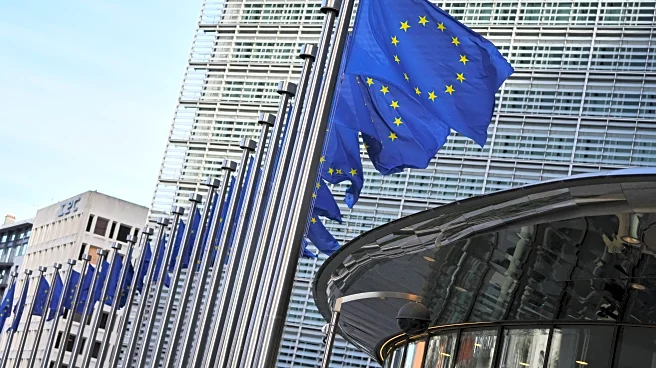
Greenland. According to George Saravelos, the global head of FX research at Deutsche Bank, Europe holds a substantial amount of U.S. assets, totaling approximately $8 trillion in bonds and equities. This financial leverage could play a crucial role if geopolitical tensions escalate into a trade war. The proposed tariffs, set to begin at 10% on February 1 and potentially rising to 25% by June 1, target eight European countries, including Denmark, France, and Germany. The tariffs are a response to these nations' resistance to President Trump's Greenland acquisition plans. Saravelos suggests that the impact on the euro may not be as severe as anticipated, and the situation could lead to a rebalancing of dollar holdings across Europe.
Why It's Important?
The potential trade conflict over Greenland underscores the complex interdependence between U.S. and European financial markets. Europe's significant holdings in U.S. assets provide it with a strategic advantage, potentially allowing it to counteract U.S. tariff measures effectively. This situation highlights the broader implications of geopolitical decisions on global capital markets. The proposed tariffs could disrupt transatlantic trade flows and impact economic relations between the U.S. and Europe. Additionally, the European Union's consideration of the Anti-Coercion Instrument (ACI) could further complicate the situation, potentially imposing restrictions on U.S. companies. The outcome of this conflict could influence market stability and investor confidence, particularly as the U.S. approaches its midterm elections.
What's Next?
The next steps in this unfolding situation will likely involve strategic decisions by both the U.S. and European countries. The European Union may decide to activate its Anti-Coercion Instrument, which could impose significant restrictions on U.S. companies and affect market access. This move would represent a shift from traditional trade measures to a focus on capital market dynamics. Investors and policymakers will be closely monitoring these developments, as the mutual financial interdependence between Europe and the U.S. reaches unprecedented levels. The potential for a 'weaponization of capital' rather than trade flows could have far-reaching consequences for global markets.