
What's Happening?
A recent study has revealed that the Tyrannosaurus rex, often considered the 'king of dinosaurs,' grew more slowly than previously thought, reaching its full size at around 40 years of age. This research,
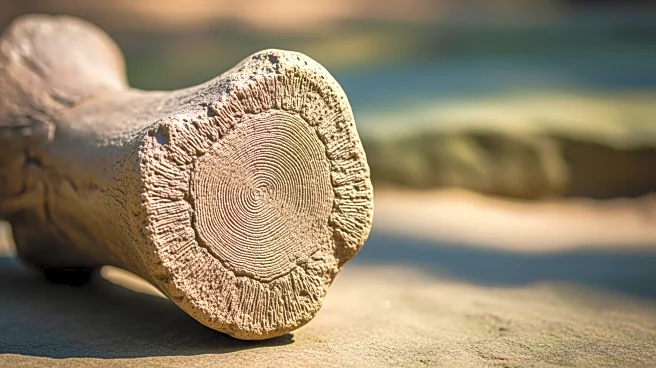
published in the journal PeerJ, involved an extensive analysis of 17 tyrannosaur specimens, using advanced statistical algorithms and bone analysis to uncover hidden growth rings. The findings suggest that T. rex had a prolonged growth phase, allowing younger tyrannosaurs to occupy various ecological roles. This slow growth may have contributed to their dominance as apex carnivores during the Cretaceous Period. The study also raises questions about the classification of certain specimens, suggesting that some may belong to different species.
Why It's Important?
The study's findings challenge previous assumptions about the growth and development of T. rex, providing a more nuanced understanding of its life history. This research could have significant implications for paleontology, as it suggests that the growth patterns of other dinosaur species may also need reevaluation. By extending the known growth phase of T. rex, the study highlights the complexity of dinosaur ecosystems and the adaptive strategies that allowed these creatures to thrive. The potential reclassification of certain specimens could lead to a reevaluation of the diversity within the Tyrannosaurus genus, impacting our understanding of dinosaur evolution and biodiversity.