




What's Happening?
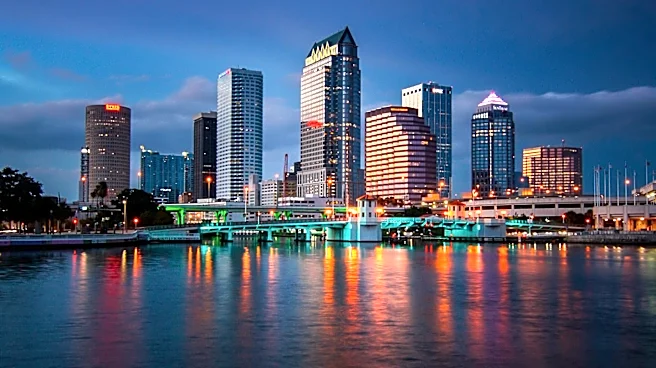
Tampa City Council is set to consider a $92.7 million contract for the South Howard Flood Relief Project, a long-standing initiative to upgrade underground infrastructure in the South Howard Avenue area to combat chronic flooding. City Council Member
Bill Carlson is advocating for an alternatives analysis, arguing that the current plan may be too expensive, disruptive, and potentially insufficient, especially for Palma Ceia Pines. Tampa Mobility Director Brandon Campbell stated the project would eliminate structural flooding for approximately 96 homes and businesses during a five-year, eight-hour storm and reduce structural flooding by about 70% during a Hurricane Milton-like event. However, businesses in the SoHo district, represented by the SoHo Business Alliance, express concerns that the four-year construction period will severely impact their operations, with some fearing they 'will not survive.'
Why It's Important?
This project highlights the critical challenge U.S. cities face in upgrading aging infrastructure to address the increasing threat of climate-related events like severe flooding. The $92.7 million investment in Tampa underscores the significant financial burden on municipalities and taxpayers. The pushback from local businesses in the SoHo district illustrates the complex trade-offs between essential public works projects and their immediate economic impact on local economies. The debate over the project's scope, cost, and effectiveness, particularly regarding its ability to withstand major hurricanes, reflects broader national discussions on infrastructure resilience and urban planning in vulnerable coastal areas. The outcome in Tampa could set a precedent for how other cities balance long-term environmental protection with short-term economic stability.
What's Next?
The Tampa City Council is scheduled to vote on the $92.7 million construction agreement with Kimmins Contracting Corp. on Thursday. Before the vote, the SoHo Business Alliance plans to release an analysis from its own consulting engineer, proposing alternative solutions that they believe would be less expensive and disruptive. City officials, including Tampa Mobility Director Brandon Campbell, have outlined plans to mitigate business disruption during the four-year construction, such as building in shorter sections and providing dedicated staff for business access, along with marketing efforts. The Council's decision will determine the future of this significant flood relief project and its immediate impact on the South Howard business community and residents.
Beyond the Headlines
The Tampa flood project debate extends beyond immediate infrastructure concerns, touching upon deeper issues of urban development, environmental justice, and the role of local government in balancing competing interests. The long history of flooding in the South Howard area, coupled with the projected impacts of climate change, underscores the urgency of such projects. However, the strong opposition from local businesses highlights the often-overlooked social and economic costs of large-scale public works. This situation brings to light the need for comprehensive planning that not only addresses engineering challenges but also incorporates robust community engagement and economic support mechanisms for affected stakeholders. The ethical dimension of potentially sacrificing local businesses for broader community resilience is a critical consideration that many U.S. cities will increasingly face.