







What's Happening?
Colorado State University (CSU) recently hosted its 42nd annual Advancing Indigenous Science and Engineering Society (AISES) Powwow on November 14. The event brought together Indigenous and campus communities to celebrate Native American Heritage Month,
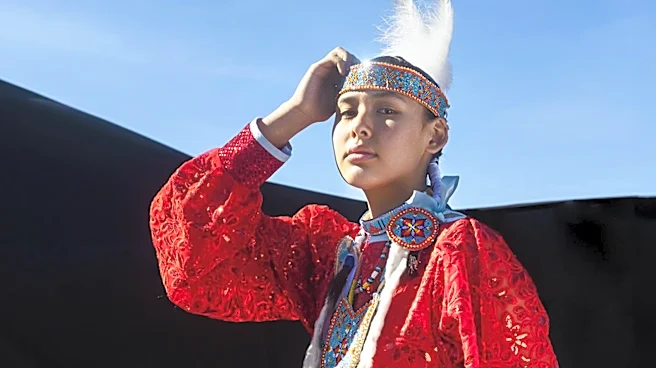
featuring dancers, traditional food, and vendors. Organized by the Associated Students of Colorado State University, Ram Events, the Native American Cultural Center, and other campus organizations, the free event focused on the theme 'Working Together in Modernization.' This theme highlighted how Indigenous students and professionals are integrating ancestral systems into modern sciences, academia, and other fields. The powwow commenced with gourd dancing and a grand entry, followed by intertribal dancing and recognition of younger generations who are continuing their ancestors' traditions. Vendors offered handcrafted items such as beaded jewelry, headwear, and other pieces made from materials significant to various tribes, alongside traditional and taco fry breads.
Why It's Important?
This annual powwow serves as a crucial platform for cultural preservation and education within the U.S., particularly in academic settings. By showcasing Indigenous traditions, regalia, and storytelling, the event fosters a deeper understanding and appreciation of Native American cultures among the broader community. The theme 'Working Together in Modernization' is particularly significant as it addresses the contemporary relevance of Indigenous knowledge systems in fields like science and engineering, challenging stereotypes and promoting inclusivity. For Indigenous students and professionals, it provides a space for representation and validation, reinforcing their identities and contributions. The event also supports Indigenous artisans and entrepreneurs, offering them a venue to share their crafts and generate income, while also facilitating cross-cultural exchanges and strengthening community bonds in the Fort Collins region and beyond.
What's Next?
The continued success and growth of events like the AISES Powwow suggest a sustained effort to promote Indigenous visibility and cultural exchange within U.S. universities and communities. Future iterations of the powwow are likely to build upon this year's theme, potentially exploring new ways to integrate Indigenous perspectives into modern discourse and academic curricula. There may be increased collaboration between university departments and Indigenous organizations to expand the reach and impact of such celebrations. Additionally, the focus on supporting young generations in carrying on traditions indicates a long-term commitment to cultural continuity. The event's role in fostering dialogue and understanding could lead to further initiatives aimed at addressing Indigenous issues and promoting reconciliation within the broader society.
Beyond the Headlines
The AISES Powwow at CSU transcends a mere cultural celebration; it represents a vital act of decolonization and reclamation within the U.S. academic landscape. By centering Indigenous voices and traditions, it challenges historical narratives that have often marginalized Native American contributions. The emphasis on 'Working Together in Modernization' highlights the intellectual richness of ancestral systems and their potential to offer innovative solutions to contemporary challenges, particularly in science and technology. This approach not only enriches academic disciplines but also promotes a more holistic and inclusive understanding of knowledge. Furthermore, the event fosters a sense of community and belonging for Indigenous individuals, counteracting the effects of historical trauma and promoting cultural resilience. It underscores the ethical imperative for institutions to actively support and integrate Indigenous perspectives, moving beyond tokenism towards genuine partnership and respect.