



What's Happening?
Researchers in southwest China have discovered a new species of dinosaur, Mamenchisaurus sanjiangensis, which lived approximately 160 million years ago during the late Jurassic Period. This plant-eating dinosaur is notable for its extraordinarily long
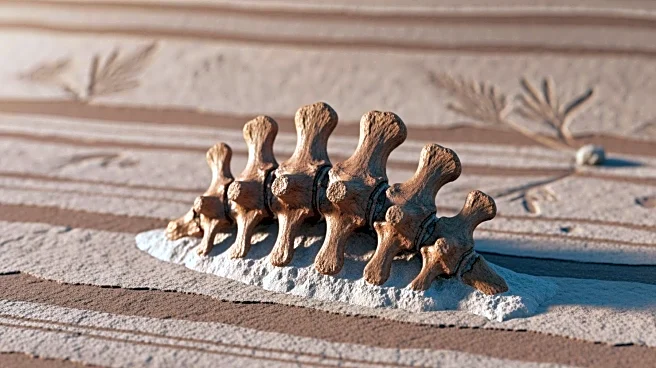
neck and is part of the sauropod group, which includes large, long-necked dinosaurs. The discovery was led by Hui Dai, a paleontologist at the Institute of Paleontology in southwest China. The fossil was found in the Upper Shaximiao Formation near Chongqing, in mudstones that suggest it was deposited during the Oxfordian stage of the Late Jurassic. The bones include parts of the neck, back, hip, tail, and hind limbs, indicating the dinosaur was a massive creature, likely weighing several tons. The species name, sanjiangensis, refers to the Hechuan District of Chongqing, where the fossil was found. This discovery adds to the understanding of sauropod diversity and distribution in East Asia during the Jurassic period.
Why It's Important?
The discovery of Mamenchisaurus sanjiangensis provides significant insights into the diversity and evolution of sauropods in East Asia during the Jurassic period. It challenges the East Asian Isolation hypothesis, which suggested that East Asia was geographically isolated from other continents during this time. The presence of mamenchisaurids in both China and Africa indicates that these dinosaurs had a wider range than previously thought. This finding contributes to the understanding of how sauropods achieved global distribution by the Middle Jurassic, with diversity peaking in the Late Jurassic. The anatomical features of Mamenchisaurus sanjiangensis, such as its long neck and camellate bone structure, highlight the evolutionary adaptations that allowed these dinosaurs to thrive in their environments. This discovery also underscores the importance of continued paleontological research in the Sichuan Basin, a region rich in dinosaur fossils.