






What's Happening?
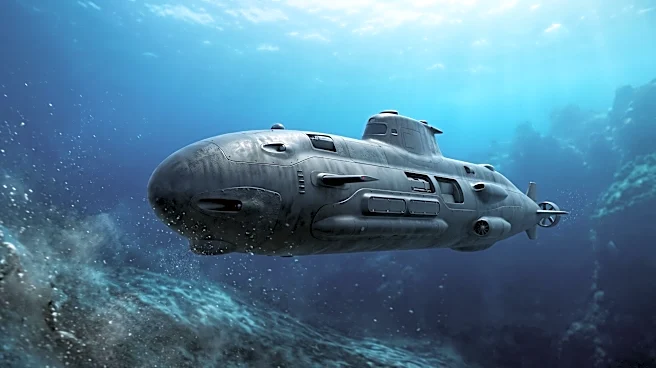
The Royal Australian Navy is preparing to upgrade its fleet of Ghost Shark autonomous uncrewed submarines, developed by American defense technology company Anduril Industries. These submarines will be enhanced to carry and deploy naval mines, launch swarms
of uncrewed aerial vehicles (UAVs), and deliver undersea supply payloads. This development is part of a significant technological advancement for the Australian military, aiming to bolster its operational stance and deterrence capabilities in the Indo-Pacific region. The formal announcement of arming these submarines and integrating complex payloads precedes a large-scale AUKUS Pillar II naval exercise off the coast of San Diego. During this multinational drill, Australia plans to test the integration of specialized payloads on the Ghost Shark and other uncrewed vessels like the Speartooth and Bluebottle. The specialized Australian Ghost Shark model, based on the Dive-XL platform, can carry up to 12 naval mines and at least 24 folding Altius-600 UAVs, configurable for reconnaissance, intelligence gathering, or one-way attack missions.
Why It's Important?
This initiative is crucial for enhancing U.S. and allied defense capabilities in the Indo-Pacific. The development of these advanced autonomous underwater vehicles by an American company, Anduril Industries, underscores the U.S.'s role in providing cutting-edge defense technology to its allies. The AUKUS pact, uniting the United States, the United Kingdom, and Australia, aims for full payload compatibility across all partner undersea vessels by 2027, which will significantly strengthen collective maritime security. The accelerated procurement of these autonomous vessels is a direct response to rising security tensions and increased presence of Chinese People's Liberation Army Navy (PLA Navy) intelligence collection ships near Australia's shores. By fielding this autonomous submarine fleet, Australia, with U.S. technological support, seeks to ensure continuous surveillance, enhance maritime area-denial against hostile actors, and protect vital sea lines of communication, thereby contributing to regional stability and U.S. strategic interests.
What's Next?
The immediate next step involves the large-scale AUKUS Pillar II naval exercise off the coast of San Diego, where the Australian military will test the integration of these specialized payloads. This exercise will be critical for validating the new capabilities and ensuring interoperability among the AUKUS partners. By 2027, the three nations aim to achieve full payload compatibility across all partner undersea vessels, indicating a continued focus on joint development and deployment of advanced maritime technologies. The Australian government's significant investment of approximately $1.7 billion in this national project, including the establishment of a new local manufacturing facility in Sydney, suggests a sustained commitment to expanding this fleet. Future developments will likely include further integration of these autonomous systems into broader naval operations and continued collaboration within the AUKUS framework to counter evolving threats in the Indo-Pacific.
Beyond the Headlines
The deployment of highly autonomous uncrewed submarines equipped with mines and drones raises significant ethical and strategic questions regarding the future of naval warfare. The increasing reliance on AI-powered systems for reconnaissance and potential one-way attack missions blurs the lines of human control and accountability in combat. This technological shift could lead to a new arms race in autonomous underwater capabilities, potentially destabilizing maritime security if not governed by clear international norms. Furthermore, the ability of these submarines to operate covertly and deploy various payloads could redefine concepts of sovereignty and territorial waters, particularly in contested regions. The emphasis on protecting critical seabed infrastructure also highlights a growing concern over underwater espionage and sabotage, making these autonomous systems vital for safeguarding critical communication and energy networks. The long-term implications include a potential reduction in human risk in dangerous missions, but also the risk of unintended escalation due to autonomous decision-making.