






What's Happening?
Russian President Vladimir Putin has rejected Ukrainian President Volodymyr Zelensky's offer to negotiate an end to the ongoing conflict, reiterating Russia's commitment to its war objectives. Despite claims of military success, evidence suggests Russian advances
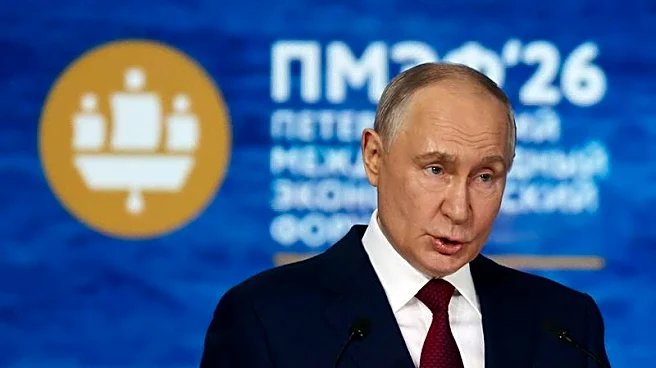
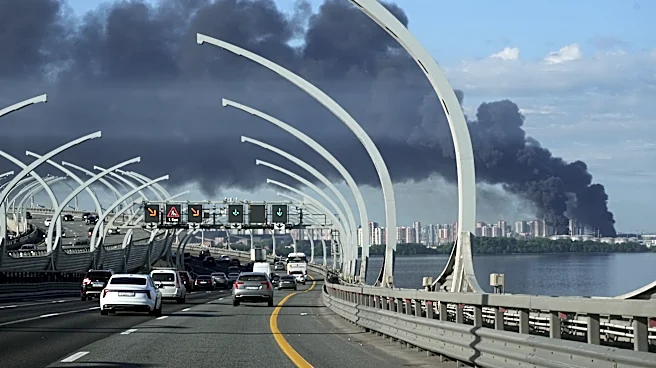
have largely stagnated, with Ukrainian forces achieving tactical successes. Putin's statements at the St. Petersburg International Economic Forum reflect his belief in an inevitable Russian victory, despite mounting challenges such as economic strain, recruitment issues, and societal discontent. Ukrainian forces have intensified their strike campaigns, further complicating Russia's war efforts.
Why It's Important?
Putin's rejection of peace talks and continued commitment to the war underscores the protracted nature of the conflict, with significant implications for regional stability and international relations. The ongoing war strains Russia's economy and military resources, potentially affecting global markets and geopolitical dynamics. Ukraine's tactical successes and intensified strike campaigns highlight the resilience and strategic capabilities of Ukrainian forces, which could influence future military and diplomatic engagements in the region.
What's Next?
The conflict is likely to continue as both sides remain entrenched in their positions. Russia's economic and military challenges may intensify, potentially leading to shifts in strategy or increased pressure for diplomatic solutions. International stakeholders, including the U.S. and European nations, may need to reassess their support and strategies in response to the evolving situation. The potential for further escalation or breakthroughs in negotiations remains uncertain, with significant implications for global security and economic stability.