




What's Happening?
South Korea has dramatically transformed its approach to food waste recycling over the past three decades, achieving a 98% recycling rate today, up from less than 3% in 1995. This success has fostered a circular green economy, yielding economic, environmental,
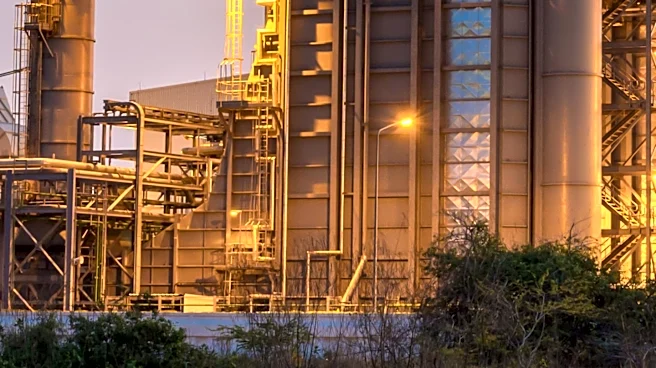
and social benefits. Recycled food waste is repurposed into animal feed, compost, and energy. For instance, the Daejeon Bioenergy Centre processes over 400 tonnes of food scraps daily, generating enough energy to power approximately 20,000 households. The country's top-down approach initially faced resistance but has normalized food waste recycling through methods like pre-paid waste bags and electronic bins in apartment buildings. Local businesses are mandated to adhere to disposal regimes, including charging customers for uneaten food. The Seoul Metropolitan Government further implemented an incentive-based policy in 2022, rewarding residents who reduce food waste by 10% or more with points usable for utility bills. Additionally, the Yindii app in Seoul allows consumers to purchase unsold food from participating businesses at reduced prices.
Why It's Important?
South Korea's advanced food waste recycling model presents a significant case study for other nations, including the U.S., grappling with waste management and environmental sustainability. The U.S. faces substantial challenges with food waste, which contributes to landfill burden and methane emissions. Adopting similar comprehensive strategies could lead to considerable environmental improvements, such as reduced greenhouse gas emissions and decreased reliance on landfills. Economically, the creation of a circular economy around food waste can generate new industries and jobs in areas like bioenergy production, composting, and animal feed manufacturing. For U.S. cities and states, implementing incentive-based programs and mandatory disposal regimes could shift consumer and business behavior, leading to more efficient resource use and cost savings in waste disposal. However, the U.S. would need to consider its lower population density and vast geographical spread, which could make a national, centralized system less feasible, potentially necessitating more localized initiatives.
What's Next?
South Korea aims to halve its generated food waste by 2030, aligning with the Food Waste Breakthrough Initiative launched at COP30. This goal suggests a continued focus on not just recycling, but also on active mechanisms to reduce waste generation at the source. Future efforts will likely involve refining existing policies, expanding incentive programs, and enhancing public education. Other countries, including the U.S., may draw lessons from South Korea's experience, particularly in developing local government-led food recycling initiatives. For instance, cities like New York are already exploring such programs. The emphasis will be on ensuring compliance through mechanisms like financial penalties, as South Korea introduced fines for incorrect disposal in 2013. Public education campaigns, potentially utilizing official apps and multilingual guidebooks, will be crucial to clarify proper disposal practices and maximize participation among diverse populations.
Beyond the Headlines
The South Korean model highlights the deeper societal and cultural shifts required for effective waste management. Beyond the technical aspects of recycling, the success hinges on a collective commitment from citizens, businesses, and government. The initial resistance to top-down policies underscores the importance of public engagement and education in overcoming behavioral inertia. The challenges encountered, such as concerns about livestock diseases from recycled animal feed and high salt content in fertilizers, point to the need for continuous research and development in waste processing technologies to ensure safety and quality. Furthermore, the incentive-based policies and apps like Yindii demonstrate how technology and economic incentives can be leveraged to foster sustainable consumption patterns. This holistic approach, integrating policy, technology, and public participation, offers a blueprint for addressing complex environmental issues and fostering a more sustainable future globally.