





What's Happening?
A Florida man, Jarrel Lamont Nightingale, 41, is facing multiple charges in Kenly, North Carolina, following the recovery of approximately $258,000 worth of stolen copper wire. The Kenly Police Department initiated an investigation on August 14 after
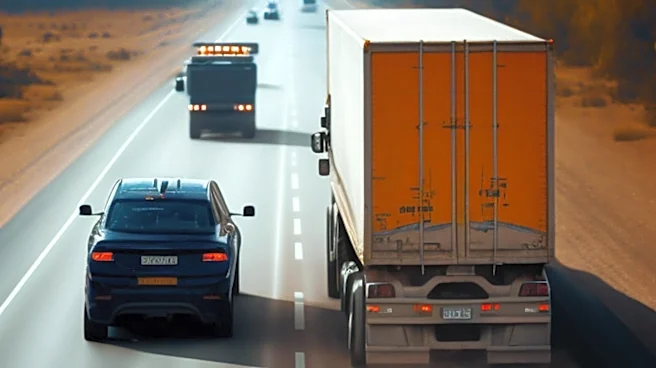
receiving information about a suspected cargo theft organization operating across various jurisdictions. Working with out-of-state agencies, officers located a stolen 53-foot J.B. Hunt trailer, which, along with its contents, had been reported stolen. Nightingale was subsequently located at a local truck stop and taken into custody after a brief struggle. During his arrest, a concealed handgun was found on him. A search warrant for the trailer led to the discovery of the substantial amount of stolen copper wire. Nightingale has been charged with felony possession of stolen goods or property, felony possession of a stolen motor vehicle, and carrying a concealed gun, and was placed under a $20,000 secured bond. The Selma Police Department and Four Oaks Police Department assisted in the investigation, which remains ongoing as law enforcement continues to look into the suspected cargo theft operation.
Why It's Important?
This incident highlights the significant financial impact of cargo theft on businesses and the broader supply chain. The recovery of $258,000 worth of copper wire underscores the high value of such materials, making them attractive targets for organized criminal enterprises. Cargo theft can lead to increased insurance costs for transportation companies, higher prices for consumers as businesses try to recoup losses, and potential disruptions in the availability of goods. The involvement of a suspected multi-jurisdictional organization suggests a sophisticated network, posing a challenge to law enforcement agencies that often operate within specific geographical boundaries. The successful collaboration between the Kenly Police Department and out-of-state agencies demonstrates the critical need for inter-agency cooperation to combat such crimes effectively. Furthermore, the discovery of a concealed weapon during the arrest points to the potential for violence associated with these criminal activities, raising concerns for public safety and the safety of law enforcement officers.
What's Next?
The investigation into the suspected cargo theft operation is ongoing, indicating that more arrests or charges could follow as law enforcement agencies continue to gather information and identify other individuals involved. Jarrel Lamont Nightingale will proceed through the legal system, facing the charges of felony possession of stolen goods or property, felony possession of a stolen motor vehicle, and carrying a concealed gun. His $20,000 secured bond will determine his pre-trial release status. The outcome of his case will depend on further evidence and court proceedings. Law enforcement will likely focus on dismantling the broader cargo theft organization, which could involve tracking the origins and intended destinations of the stolen copper wire, as well as identifying other members of the network. This ongoing effort aims to disrupt similar criminal activities and prevent future thefts of valuable cargo, potentially leading to enhanced security measures within the logistics and transportation industries.
Beyond the Headlines
The theft of copper wire, as seen in this case, often extends beyond simple property crime, touching upon critical infrastructure concerns. Copper is a vital material in telecommunications, electrical grids, and construction, making its theft a potential threat to essential services and economic stability. Large-scale thefts can lead to power outages, communication disruptions, and significant repair costs for utility companies and municipalities. The black market for stolen metals is a global issue, driven by fluctuating commodity prices, and often involves complex networks for fencing and reselling these materials. This incident also sheds light on the challenges faced by law enforcement in tracking and recovering stolen goods that are easily transportable across state lines and can be quickly melted down or repurposed, making identification difficult. The presence of a concealed weapon further underscores the dangerous nature of these operations, highlighting the broader societal implications of organized crime beyond just financial loss.