



What's Happening?
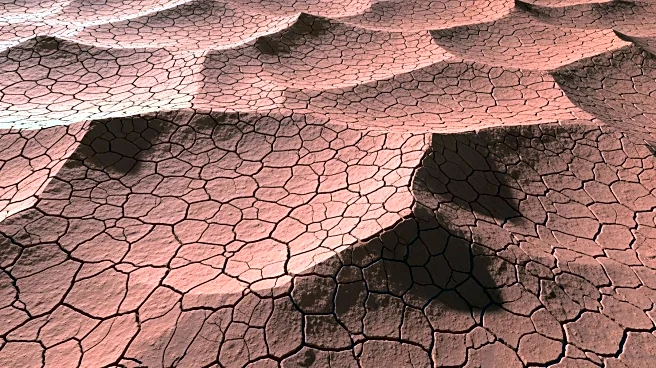
NASA's Curiosity rover has captured images of polygon-shaped features in the 'Monte Grande' boxwork hollow on Mars. These patterns, observed using the Mars Hand Lens Imager, are part of a systematic campaign to analyze the composition and structure of the bedrock
in the area. The discovery of these polygons, which were previously obscured, provides new insights into the geological history of Gale Crater. The rover's mission includes high-resolution imaging and compositional analysis to understand the relationship between these features and the surrounding terrain.
Why It's Important?
The study of polygonal features on Mars is crucial for understanding the planet's geological processes and history. These formations can offer clues about past environmental conditions, such as the presence of water or volcanic activity. By analyzing these features, scientists can gain a better understanding of Mars' evolution and its potential to support life. The findings from Curiosity's mission contribute to the broader goals of Mars exploration, including the search for signs of past habitability and preparation for future human missions.
What's Next?
Curiosity will continue its exploration of the 'Monte Grande' hollow, conducting further imaging and compositional analysis. The rover's findings will be used to refine models of Mars' geological history and inform future missions. As Curiosity advances its mission, it will provide valuable data that could influence the planning and objectives of upcoming Mars exploration efforts, including those involving human exploration.