



What's Happening?
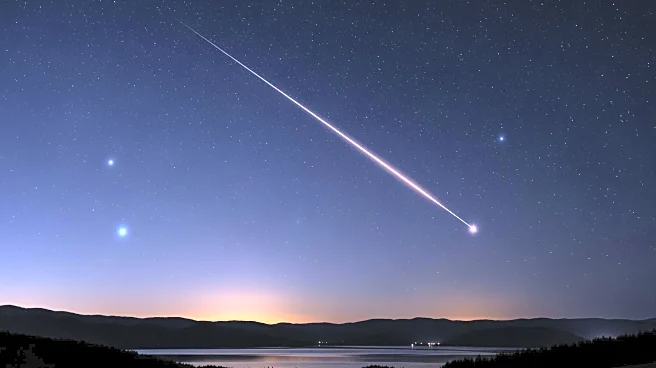
The Perseid meteor shower is anticipated to peak on August 12-13, 2026, with minimal lunar interference, making it one of the most favorable meteor showers of the year. This celestial event is expected to provide high meteor rates once the moon sets,
offering an excellent opportunity for sky-gazers to witness a spectacular display. According to the American Meteor Society, 2026 will feature a total of 12 meteor showers, with the Perseids being one of the highlights. The Perseids are known for their bright meteors and high frequency, making them a popular event for both amateur and seasoned astronomers.
Why It's Important?
The Perseid meteor shower is a significant event for astronomy enthusiasts and the general public alike, as it offers a chance to engage with the night sky in a meaningful way. The lack of significant lunar interference during the peak of the Perseids in 2026 enhances visibility, allowing for a clearer and more impressive display. This event not only provides an opportunity for educational outreach and public engagement in astronomy but also boosts local tourism in areas known for clear skies and minimal light pollution. Communities and businesses in these regions may benefit economically from increased visitor numbers during the meteor shower.
What's Next?
As the date of the Perseid meteor shower approaches, astronomy clubs and observatories across the United States are likely to organize viewing events and educational programs to maximize public engagement. These events may include guided stargazing sessions, lectures on meteor showers, and workshops on night sky photography. Additionally, local governments and tourism boards in areas with optimal viewing conditions may promote the event to attract visitors, potentially leading to increased economic activity. The anticipation of the Perseids also encourages individuals to invest in telescopes and other stargazing equipment, further supporting the astronomy industry.