







What's Happening?
Joji Muramoto, a 65-year-old soil scientist at the University of California’s Cooperative Extension program, is set to retire next summer after revolutionizing organic strawberry farming. Muramoto developed an elegant fermentation-based technique, known
as anaerobic soil disinfestation (ASD), to control soilborne diseases without chemical fumigants. This method is now utilized in at least 11 U.S. states and nine other countries, extending beyond strawberries to vegetables and tree crops. Muramoto's journey began in the 1970s in Tokyo, influenced by his sister's leukemia diagnosis and his mother's involvement in the Japanese organic movement. He later earned a doctoral degree from Tokyo University of Agriculture, where he developed new soil and crop testing methods. His research in California, particularly at UC Santa Cruz, focused on finding biological strategies to combat diseases like verticillium wilt, which had plagued organic farms. After years of experimentation, Muramoto discovered that combining carbon-rich materials like rice bran with specific soil temperatures could effectively suppress the disease, leading to a breakthrough in organic farming practices.
Why It's Important?
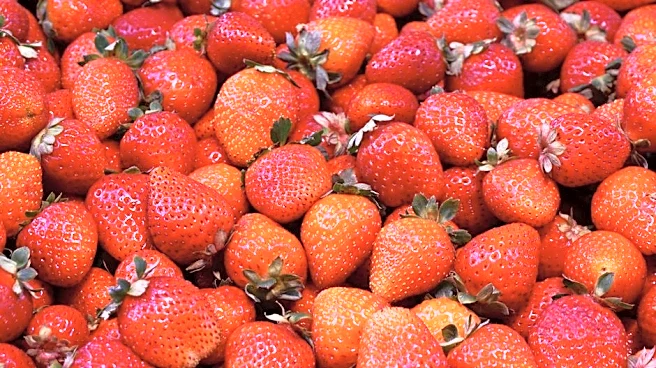
Muramoto's work is significant for the U.S. agricultural industry, particularly for strawberry farming, which has historically been one of the most chemically intensive crops. His ASD technique provides a viable, chemical-free alternative to powerful fumigants like methyl bromide, which was phased out due to its ozone-damaging effects. This innovation reduces health risks for agricultural workers and nearby residents who are often exposed to these chemicals. The widespread adoption of ASD has led to a substantial increase in organic strawberry production in California, from just over 3,000 acres to nearly 5,800 acres, representing almost 14% of the state's total strawberry output. This shift demonstrates a successful model for sustainable agriculture, offering economic benefits to organic farmers and meeting growing consumer demand for organic produce. The reduction of 565,492 pounds of fumigants from agricultural fields highlights the profound environmental and public health impact of his research.
What's Next?
As Muramoto approaches retirement, his legacy will continue through the widespread adoption of his ASD technique and ongoing research into alternative carbon sources. With rice bran becoming more expensive, Muramoto has been trialing variations of ASD using wheat bran and dried food waste, showing promising results. This ongoing adaptation ensures the method remains economically viable for farmers. Additionally, research efforts are focused on addressing new fungal pathogens like Fusarium oxysporum, which behaves differently from verticillium, indicating a continuous need for innovation in organic disease management. The University of California's establishment of the first Cooperative Extension specialist position dedicated to organic agriculture, filled by Muramoto in 2019, signifies institutional commitment to advancing these sustainable practices. Future developments will likely involve further refinement of ASD for various crops and regions, and continued efforts to reduce reliance on chemical inputs in agriculture.
Beyond the Headlines
Muramoto's story extends beyond agricultural science, touching upon themes of personal dedication, immigrant contributions, and the long-term impact of scientific research. His motivation, stemming from a personal tragedy involving his sister's leukemia, underscores the profound human element driving scientific innovation. His persistence in developing a chemical-free solution, often against prevailing industry skepticism, exemplifies a commitment to public health and environmental stewardship. The success of ASD also highlights the critical role of public universities and cooperative extension programs in fostering groundbreaking research that directly benefits communities. Furthermore, Muramoto's journey as an immigrant who found support and opportunity in the U.S. and subsequently contributed significantly to its agricultural landscape, showcases the invaluable contributions of immigrants to American society and scientific progress. His work represents a quiet revolution, demonstrating that sustainable, chemical-free farming is not only possible but also scalable and economically beneficial.