
What's Happening?
WATTMORE, a Denver, Colorado-based energy technology company, has partnered with GTI Energy on an Illinois hydrogen microgrid research effort. This collaboration aims to integrate WATTMORE's technology into
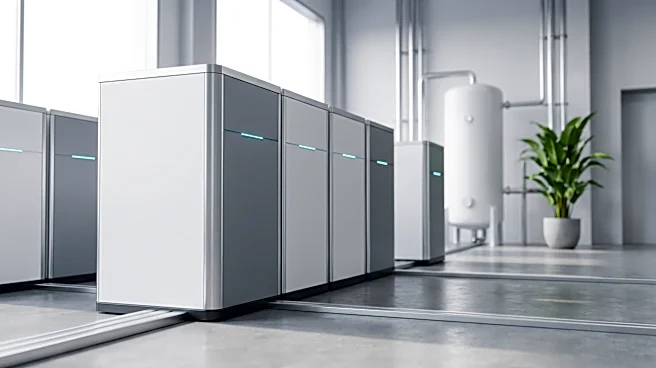
a project testing how hydrogen can be incorporated into resilient local power systems. GTI Energy, a research and technology development organization, is focused on scaling low-carbon, low-cost energy transition solutions. WATTMORE will serve as GTI Energy's energy management partner, contributing its software and services platform for energy storage, solar systems, microgrids, virtual power plants, and grid and energy management. The primary project involves advancing hydrogen-based microgrid research by integrating battery energy storage into an existing microgrid testbed at GTI Energy's facility in Des Plaines, Illinois. This initiative is part of Illinois' broader strategy to establish a clean hydrogen economy and decarbonize hard-to-abate sectors.
Why It's Important?
This collaboration is significant for the advancement of clean energy in the U.S., particularly in the hydrogen sector. The integration of hydrogen into microgrids offers a pathway to enhance energy security and resilience, which is crucial for critical infrastructure and local communities. By testing how hydrogen can effectively fit into these systems, the project aims to provide practical insights needed to move promising solutions from development to deployment. Illinois' role as a core part of the Midwest Alliance for Clean Hydrogen, supported by the U.S. Department of Energy, underscores the national importance of this research. A successful demonstration could accelerate the adoption of hydrogen as a clean energy source, contributing to decarbonization efforts in heavy-duty transportation, manufacturing, and agriculture, and reducing the nation's reliance on fossil fuels.
What's Next?
Industry experts will closely monitor the collaboration between GTI Energy and WATTMORE to assess its impact on the energy industry's progression. The research at GTI Energy's testbed will evaluate the integration of hydrogen, energy storage, and advanced controls as a system. The findings from this project are expected to generate practical insights that will inform the broader deployment of hydrogen-based microgrid solutions. Illinois will continue its efforts to establish a clean hydrogen economy, supported by state policy and regional hubs, including assessing geologic storage potential in the Illinois Basin and developing an I-80 hydrogen trucking corridor connected to Chicago. The success of this research could lead to further investments and partnerships in hydrogen technology, contributing to the U.S.'s goal of becoming a leader in clean hydrogen energy.
Beyond the Headlines
This initiative highlights a deeper trend in the energy sector: the increasing reliance on technological innovation and strategic partnerships to achieve decarbonization goals. The focus on microgrids and hydrogen reflects a move towards decentralized and diversified energy systems, which can offer greater resilience against disruptions. The project also underscores the importance of research institutions and private companies collaborating to bridge the gap between theoretical concepts and practical applications. Furthermore, the development of a clean hydrogen economy has broader implications for industrial policy, job creation, and national energy independence. The challenges of integrating new energy sources like hydrogen into existing infrastructure require not only technological solutions but also robust policy frameworks and market mechanisms to incentivize adoption and ensure economic viability. This research could pave the way for new standards and best practices in hydrogen energy management.