




What's Happening?
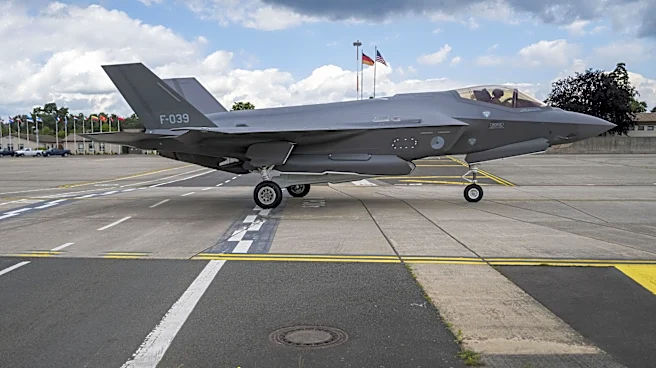
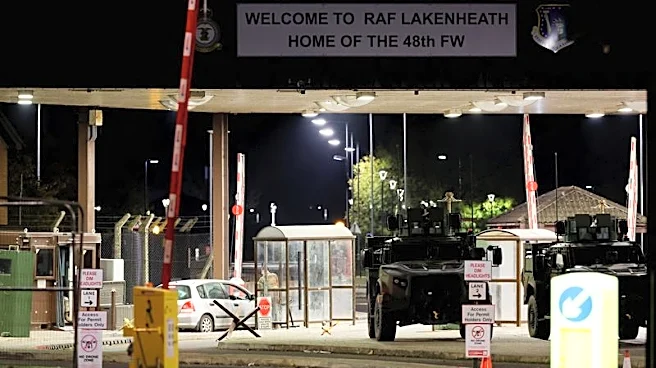
U.S. military personnel at RAF Lakenheath, a major American F-35 fighter jet base in eastern England, were ordered to take shelter on November 13 following reports of unauthorized drone activity over the installation. The incident prompted an emergency
alert marked 'REAL WORLD,' instructing personnel to seek shelter until further notice. A U.S. Air Force spokesperson confirmed that security personnel responded to reports of suspected unauthorized drones near the base, but no injuries or damage to aircraft or infrastructure were reported. The British Ministry of Defense also confirmed coordination with American forces, and officials stated the incident was resolved, with efforts continuing to establish the circumstances. RAF Lakenheath hosts the U.S. Air Force’s 48th Fighter Wing, operating F-35A Lightning II and F-15E Strike Eagle aircraft. Authorities have not publicly identified the drones or their operators.
Why It's Important?
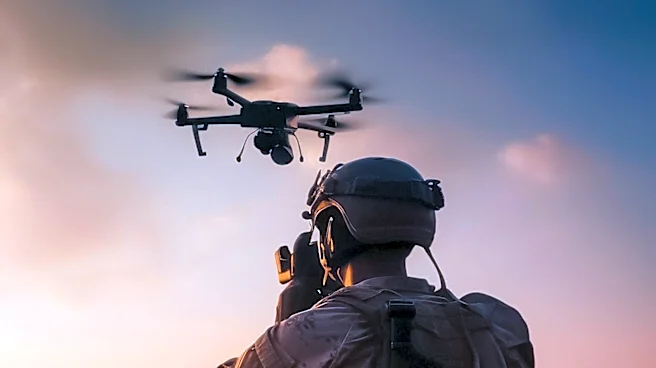
This security breach at a critical U.S. military installation in Europe highlights the growing threat posed by unidentified drones to national security and military operations. The incident underscores vulnerabilities in air defense systems against small, potentially undetectable aerial vehicles, which could be used for reconnaissance, espionage, or even attack. For the U.S., such incursions raise concerns about the safety of its personnel and high-value assets, as well as the integrity of its defense posture abroad. The incident also emphasizes the need for enhanced counter-drone technologies and protocols at military bases worldwide. The lack of identification of the drones or their operators adds to the gravity of the situation, suggesting potential state-sponsored activity or sophisticated non-state actors.
What's Next?
An investigation is underway to establish the circumstances of the drone incursions, including the identity of the drones and their operators. This will likely involve collaboration between U.S. and British intelligence and security agencies. The incident will likely lead to a review of security protocols and the deployment of advanced counter-drone measures at RAF Lakenheath and other U.S. military facilities globally. The U.S. Air Force may also accelerate the development and integration of new technologies to detect, track, and neutralize unauthorized drones. The broader implications could include increased international cooperation on drone threat mitigation and the development of new legal frameworks to address airspace violations by unidentified unmanned aerial systems.
Beyond the Headlines
The repeated incidents of unidentified drones near military facilities, including a similar event near a German military facility, suggest a new frontier in intelligence gathering and potential hybrid warfare. This raises profound ethical questions about the use of autonomous or remotely operated systems for surveillance and the potential for escalation if such incursions are deemed hostile. The challenge of identifying and attributing these drone activities complicates international relations and could lead to miscalculations or unintended conflicts. Furthermore, the incident highlights the dual-use nature of drone technology, where commercially available drones can be adapted for military or nefarious purposes, posing a significant challenge for security agencies to differentiate between legitimate and threatening aerial activity.