

What's Happening?
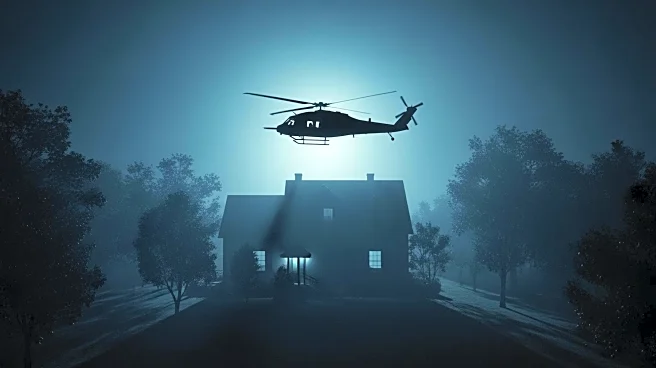
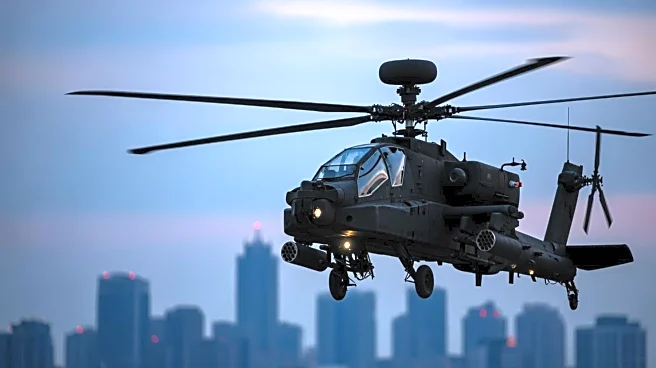
The Army has suspended the crew of two Apache helicopters that were seen flying near the home of singer Kid Rock in Nashville. The incident occurred during a training mission, and the Army is conducting a formal investigation to determine the circumstances
surrounding the flyby. Army spokesperson Maj. Montrell Russell stated that the investigation will focus on compliance with FAA regulations, aviation safety protocols, and approval requirements. The purpose of the training mission remains unclear, and the number of personnel affected by the suspension has not been disclosed. Kid Rock expressed his belief that the crew would be alright, noting that the helicopters had flown over his house before. He mentioned his connection to President Trump and his interactions with pilots at Fort Campbell during a Thanksgiving event.
Why It's Important?
The suspension of the helicopter crew highlights the Army's commitment to enforcing aviation safety standards and holding personnel accountable for unauthorized operations. This incident underscores the importance of adhering to FAA regulations and maintaining public safety during military training missions. The investigation may lead to changes in protocol to prevent similar occurrences in the future. The event also reflects the intersection of military operations with civilian life, particularly in areas near military bases. Kid Rock's comments and social media posts have brought additional attention to the incident, potentially influencing public perception of military activities in residential areas.
What's Next?
The Army's investigation will likely result in a detailed report on the incident, which could lead to disciplinary actions or changes in training procedures. The findings may prompt discussions on the balance between military training needs and community safety. Stakeholders, including local residents and military personnel, may engage in dialogue to address concerns and improve communication regarding military operations. The incident may also lead to increased scrutiny of military flybys and their impact on civilian areas, potentially influencing future policy decisions.