


What's Happening?
Trade ministers from various countries have convened in Yaounde for a high-level World Trade Organization (WTO) meeting, focusing on critical issues in agriculture and fisheries. The meeting aims to address the need for reform within the WTO, which is currently
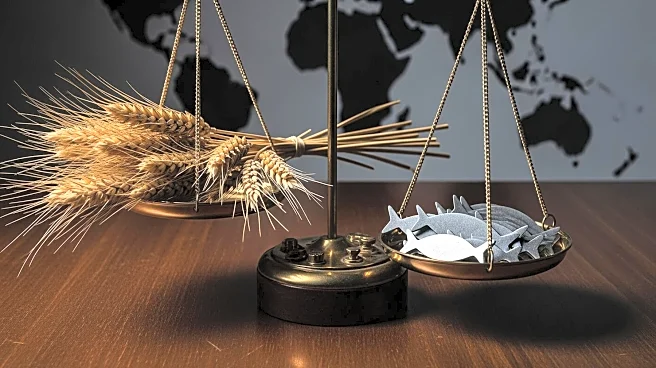
hindered by geopolitical tensions, stalled negotiations, and increasing protectionism. Despite the urgency, significant progress is not anticipated. The discussions are centered on the reduction of agricultural trade barriers, which have decreased from an average tariff of 13% in 2005 to 5.7% in 2023. However, the talks remain deeply divided, with no consensus on a program of work. Key issues include public food stockpiles and subsidies that encourage overfishing. While some members advocate for accelerated progress on specific issues, others prefer a comprehensive approach. The WTO chief has urged ministers to agree on a text that outlines clear pathways and timelines to break the deadlock, with the goal of reaching an agreement by the next ministerial meeting in two years.
Why It's Important?
The outcome of these WTO discussions holds significant implications for global trade, particularly for developing countries that rely heavily on agricultural exports. The reduction of trade barriers could enhance market access for these nations, potentially boosting their economies. However, the lack of consensus and the ongoing deadlock could perpetuate existing trade inequalities and hinder economic growth. The discussions on fisheries subsidies are crucial for sustainable fishing practices, as overfishing poses a threat to marine ecosystems and the livelihoods of communities dependent on fishing. The inability to reach an agreement could exacerbate environmental degradation and economic instability in affected regions. The broader significance lies in the potential for these talks to set a precedent for future international trade negotiations, influencing global economic policies and practices.
What's Next?
The WTO aims to reach a consensus on a declaration concerning agriculture, trade, and global food security, which would lay the groundwork for future negotiations. The next ministerial meeting, scheduled in two years, is expected to be a critical juncture for achieving a comprehensive agreement. In the interim, countries will continue to negotiate and seek common ground on contentious issues such as public food stockpiles and fisheries subsidies. The outcome of these discussions will likely influence the direction of global trade policies and the WTO's role in facilitating international trade. Stakeholders, including governments, businesses, and civil society groups, will be closely monitoring the developments, as the decisions made could have far-reaching impacts on global trade dynamics and economic stability.