
What's Happening?
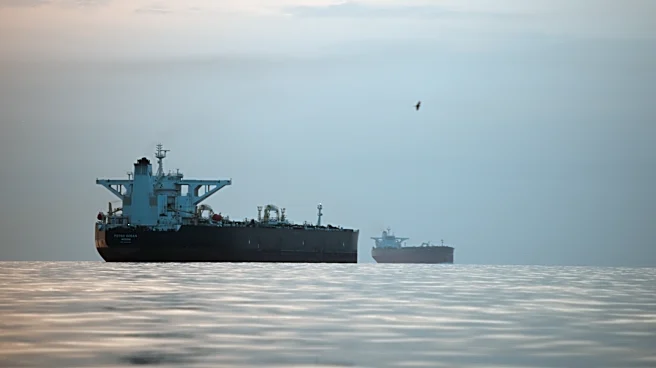
The U.S. Navy has seized an Iranian container ship, marking the first use of kinetic enforcement in a blockade of Iran's seaports. President Trump announced that the ship, named Touska, was intercepted
by the USS Spruance after ignoring warnings. The vessel was stopped by firing into its engine room, and U.S. Marines subsequently boarded and took control. This action is part of a selective blockade aimed at restricting Iran's maritime activities. The blockade allows empty tankers to pass, providing Iran with floating storage, but blocks laden vessels, impacting Iran's oil export capabilities.
Why It's Important?
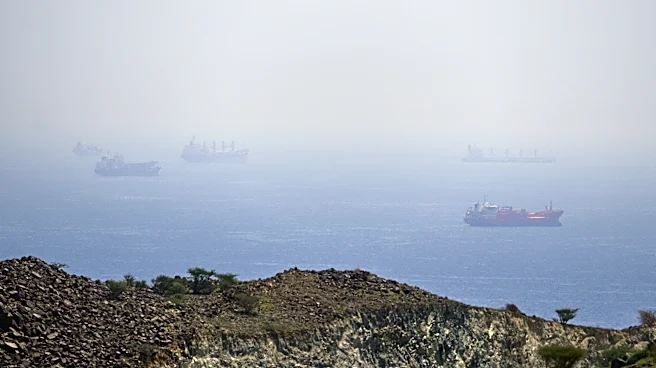
The blockade and seizure of Iranian vessels represent a significant escalation in U.S.-Iran tensions, with potential repercussions for global oil markets and regional stability. By restricting Iran's ability to export oil, the U.S. aims to exert economic pressure on the Iranian regime. This move could lead to increased volatility in oil prices, affecting global economies reliant on energy imports. The blockade also highlights the strategic importance of the Gulf of Oman and the broader geopolitical contest in the Middle East. The U.S. actions may provoke retaliatory measures from Iran, further complicating diplomatic relations.
What's Next?
The U.S. may continue to enforce the blockade, potentially leading to more confrontations with Iranian vessels. Diplomatic channels may be explored to resolve the situation, involving international bodies or regional allies. The blockade's impact on Iran's oil exports could lead to economic challenges for the country, influencing its domestic and foreign policy. The international community will likely watch closely for any escalation, given the potential for broader conflict. Future developments could shape U.S. military strategy and influence regional alliances.