


What's Happening?
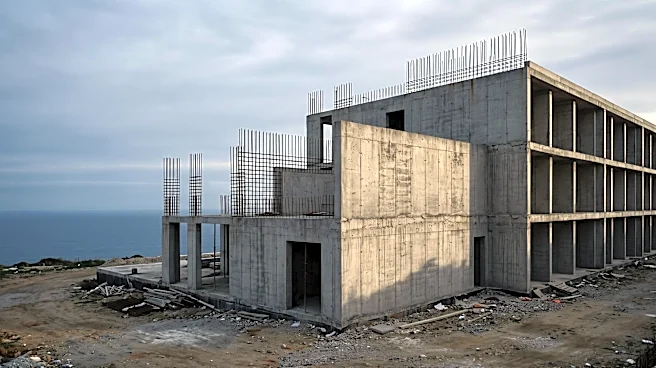
Two construction workers have become trapped in a hotel construction site in Porto Covo, Sines, Setúbal district, Portugal. The incident occurred today, with the alert being raised at 4:29 PM local time. The workers are reportedly buried at a depth of
five to six meters. Emergency services, including approximately 30 rescue personnel and nine vehicles from fire departments in Sines, Grândola, and Odemira, as well as the National Institute of Medical Emergency (INEM), are on site conducting rescue operations. A Search and Rescue Team for Collapsed Structures from the Grândola Fire Department is also present, and a team of psychologists is en route to the scene. An INEM helicopter was initially mobilized but has since been deactivated. The exact cause of the accident is currently unknown.
Why It's Important?
This incident highlights the inherent dangers within the construction industry, particularly in large-scale projects like hotel developments. The trapping of workers at significant depths underscores the critical need for stringent safety protocols and continuous oversight on construction sites to prevent such accidents. For the U.S. construction sector, this serves as a reminder of the importance of adhering to and enforcing occupational safety regulations, such as those set by OSHA, to protect workers from similar hazards. The involvement of multiple emergency response teams and specialized search and rescue units demonstrates the complexity and resource-intensive nature of such operations, which can strain local emergency services. The psychological support being dispatched also points to the broader impact of such events on workers and their families, emphasizing the need for comprehensive support systems in the aftermath of industrial accidents.
What's Next?
Rescue operations are currently underway, with emergency personnel actively working to reach the trapped victims. The immediate focus is on safely extracting the two workers from the collapsed site. Following the rescue efforts, an investigation into the cause of the accident is expected to be launched. Authorities, including potentially the Authority for Working Conditions (ACT), will likely examine the construction site's safety measures, adherence to building codes, and operational procedures to determine how the incident occurred. The findings of this investigation could lead to revised safety regulations, penalties for any negligence found, and increased scrutiny of construction practices in the region. The well-being of the trapped workers will remain a primary concern, with medical and psychological support being crucial in the coming days.
Beyond the Headlines
Beyond the immediate rescue efforts, this incident could trigger a broader re-evaluation of construction safety standards and enforcement mechanisms in Portugal. The fact that workers are buried at such a depth suggests a significant structural failure or collapse, raising questions about the integrity of the construction methods and materials used. This event may also bring to light potential systemic issues within the construction industry, such as pressures to meet deadlines that could compromise safety, or inadequate training for workers in hazardous environments. The involvement of a psychological support team underscores the often-overlooked mental health impact of such traumatic events on both the victims and the rescue personnel. This incident serves as a stark reminder of the human cost of industrial accidents and the continuous need for vigilance and investment in worker safety.