



What's Happening?
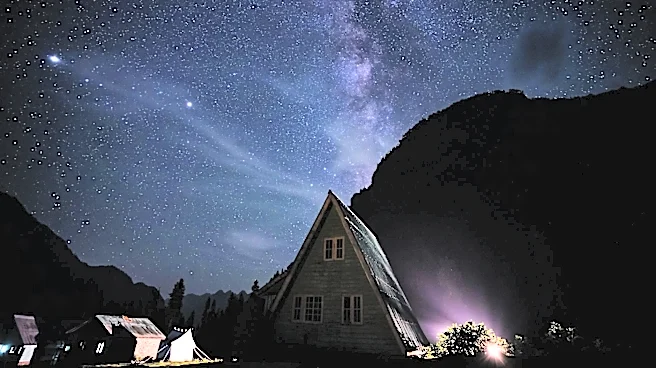
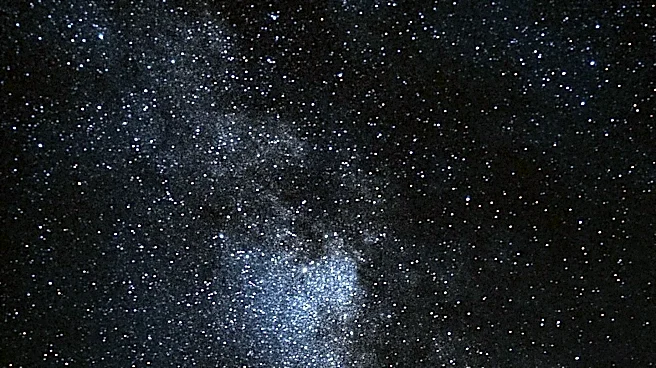
The Milky Way's Great Rift, a dark band of interstellar dust and gas, is a feature often overlooked by stargazers. Visible from the Northern Hemisphere, the Great Rift appears to split the Milky Way in half, obscuring the light from stars and nebulas.
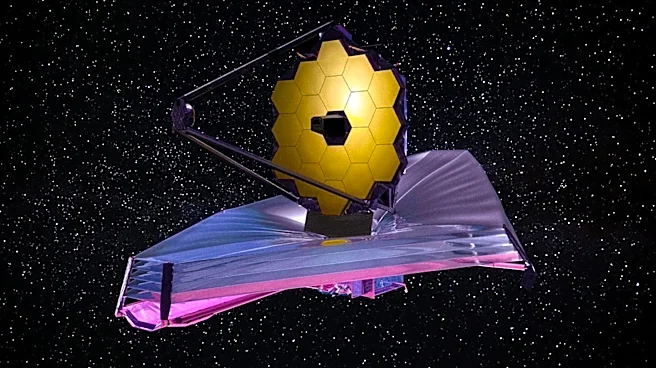
The best time to view this phenomenon is during the dark sky window starting August 6, when the moon is a waning crescent. Stargazers are advised to find a location away from light pollution and allow their eyes to adapt to the darkness for optimal viewing. The Great Rift can also be observed using infrared and radio light, which penetrate the dust, revealing the galaxy's structure.
Why It's Important?
Understanding and observing the Great Rift offers insights into the structure and composition of our galaxy. This feature highlights the complexity of the Milky Way and the role of interstellar dust in shaping our view of the cosmos. For amateur astronomers and enthusiasts, the Great Rift provides an opportunity to engage with astronomy beyond the visible stars, fostering a deeper appreciation for the universe. Additionally, the study of such features contributes to our knowledge of galactic formation and evolution, informing scientific research and exploration.
What's Next?
As interest in astronomy grows, more people may seek opportunities to observe the Great Rift and other celestial phenomena. This could lead to increased public engagement with science and support for initiatives that reduce light pollution, enhancing stargazing experiences. Advances in technology, such as improved telescopes and imaging techniques, will continue to enhance our ability to study the Milky Way and its features. Educational programs and events centered around astronomy could further promote awareness and understanding of our galaxy's hidden wonders.