
What's Happening?
The Pentagon has announced a pause in the deployment of additional U.S. troops to Poland, as part of a broader strategy to reduce American military presence in Europe. This decision aligns with the Trump
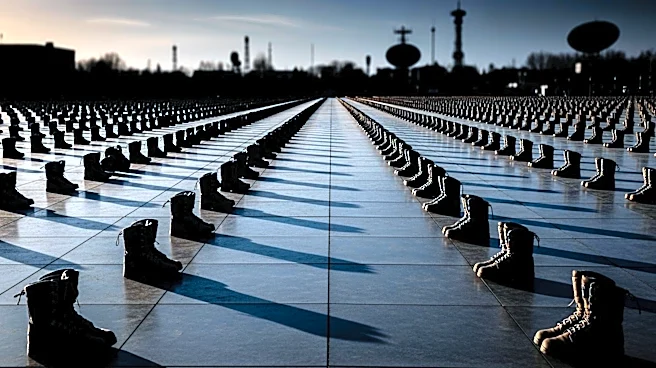
administration's 'America First' agenda, which aims to decrease U.S. military commitments abroad. The reduction involves scaling back from four brigade combat teams to three, each comprising up to 4,000 soldiers and significant military equipment. Despite the reduction, the Pentagon assured Poland of a continued strong U.S. military presence. This move has raised concerns among NATO allies, particularly as Russia's ongoing conflict in Ukraine poses a threat to the alliance's eastern flank. The decision follows a recent halt in the deployment of a Texas-based brigade combat team to Poland, which surprised both U.S. and Polish officials.
Why It's Important?
The reduction of U.S. troops in Europe is significant as it reflects a shift in U.S. military strategy under President Trump's administration, emphasizing a reduced role in European defense. This move could potentially weaken NATO's deterrence capabilities against Russian aggression, especially in Eastern Europe. The decision has sparked concern among NATO allies, who rely on U.S. military support to counterbalance Russian influence. The reduction also highlights ongoing tensions within the alliance, as President Trump has repeatedly urged European countries to increase their defense spending. The strategic realignment could impact U.S. relations with key allies and influence the broader geopolitical landscape in Europe.
What's Next?
The Pentagon will continue to assess the strategic and operational requirements for U.S. forces in Europe, considering the capabilities of European allies to contribute to regional defense. The decision to reduce troops may prompt further discussions within NATO about burden-sharing and defense commitments. Additionally, the move could lead to increased diplomatic efforts to reassure Eastern European allies of continued U.S. support. The response from NATO members and potential adjustments to their defense strategies will be closely monitored, as will any further developments in U.S.-Russia relations.