



What's Happening?
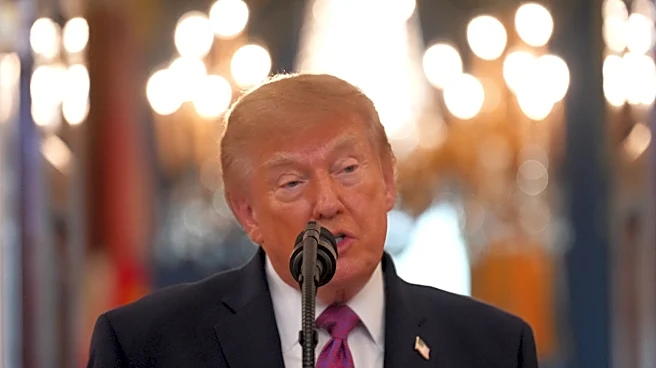
President Trump has moved to cancel almost $1 billion in spending approved by Congress, marking the second time his administration has used a 'pocket rescission' tactic. The White House announced late Friday that it was calling off $567 million for services
benefiting refugees, asylees, and other migrants through the Department of Health and Human Services. An additional $50 million for other immigrant and non-citizen aid programs, $70 million in 'Woke International Education' grants and fellowships, and $56 million in Housing and Urban Development programs are also being rescinded. The administration justified these cuts by stating President Trump is committed to eliminating 'wasteful and harmful government spending that does not benefit American citizens.' This maneuver, where the president notifies Congress shortly before the fiscal year ends that he does not wish to spend appropriated funds, is controversial. Senator Susan Collins, a Republican, and Representative Rosa DeLauro, a Democrat, both criticized the action, with Collins calling it an 'unlawful cancellation of appropriations' and DeLauro stating the administration is 'trying to steal more money.'
Why It's Important?
This action is highly significant as it represents a direct challenge to Congress's constitutional 'power of the purse.' By employing a pocket rescission, President Trump is effectively bypassing congressional approval for spending cuts, which many lawmakers, including members of his own party, deem illegal. This move impacts critical services for vulnerable populations, including refugees and migrants, potentially leaving them without necessary support. The cancellation of 'Woke International Education' grants also signals a broader ideological stance against certain types of federal funding. The controversy highlights the ongoing tension between the executive and legislative branches over budgetary authority and the separation of powers. If unchallenged or upheld, this tactic could set a precedent for future administrations to unilaterally cut congressionally approved spending, diminishing Congress's role in fiscal policy and potentially leading to more frequent impasses over federal funding.
What's Next?
The legality of President Trump's pocket rescission is likely to face challenges. Senator Susan Collins has stated she will work with colleagues to address these 'illegal actions,' suggesting potential legislative or legal responses. The Government Accountability Office has previously deemed pocket rescissions illegal, which could bolster legal arguments against the administration's move. Last year's similar action, which canceled $4.9 billion in foreign aid, led to a legal challenge that the Supreme Court allowed to proceed, though it did not rule on the merits. This indicates that the current rescissions could also end up in court. The timing of the announcement, just five days before the fiscal year ends, makes it difficult for Congress to review and respond effectively, further fueling accusations of executive overreach. The outcome of any legal or legislative challenges will be crucial in defining the limits of presidential power over appropriated funds and the balance of power between the branches of government.
Beyond the Headlines
This move by President Trump reflects a broader strategy to assert executive control and reshape government spending priorities, often at the expense of congressional authority. The targeting of programs related to immigrants and 'Woke International Education' aligns with the administration's stated policy goals and political rhetoric, appealing to a specific base. The use of a pocket rescission, a rarely employed tactic, underscores a willingness to push the boundaries of presidential power. This approach could lead to a more confrontational relationship between the White House and Congress, potentially resulting in government shutdowns or prolonged legislative battles over appropriations. Furthermore, the long-term impact on the affected programs and the communities they serve could be substantial, leading to reduced services and increased hardship for vulnerable groups. The debate over these rescissions also touches upon fundamental questions about democratic governance, accountability, and the proper role of each branch of government in fiscal decision-making.