
What's Happening?
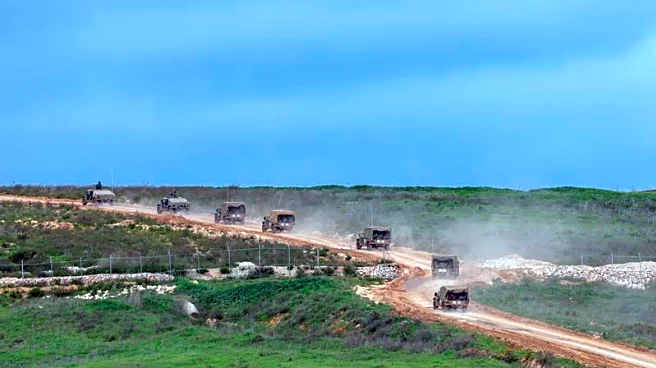
Yemen's Iran-backed Houthi rebels have launched a missile targeting southern Israel, marking the first such attack since a cease-fire with Hamas. This development comes as Israel expands its military operations in southern Lebanon, with the Israel Defense
Forces (IDF) increasing troop presence to establish a 'security zone.' The escalation in military activities has raised concerns about a broader conflict in the region. Additionally, the IDF reported intercepting two Hezbollah drones and several rockets fired from Lebanon, with no casualties reported. The situation is further complicated by the involvement of other regional players, including Iran, which has been accused of supporting the Houthis and Hezbollah.
Why It's Important?
The missile launch by the Houthis signifies a potential widening of the conflict in the Middle East, involving multiple state and non-state actors. For the United States, this development could impact its foreign policy and military strategy in the region, especially given the recent wounding of twelve U.S. troops in an Iranian strike on a base in Saudi Arabia. The escalation could also affect global oil markets, as tensions in the Middle East often lead to fluctuations in oil prices. Furthermore, the involvement of Iran and its allies could strain U.S.-Iran relations, complicating diplomatic efforts to address nuclear and regional security issues.
What's Next?
The situation is likely to remain volatile, with potential for further military engagements between Israel and its adversaries. The international community, including the United States, may need to engage in diplomatic efforts to de-escalate tensions and prevent a broader conflict. Monitoring the responses from major stakeholders, such as the United Nations and regional powers, will be crucial in understanding the potential for peace or further escalation. Additionally, the impact on global oil markets and regional stability will be closely watched by economic and political analysts.
Beyond the Headlines
The missile attack and subsequent military actions highlight the complex web of alliances and enmities in the Middle East. The involvement of non-state actors like the Houthis and Hezbollah, supported by Iran, underscores the challenges in achieving lasting peace in the region. The situation also raises questions about the effectiveness of international diplomatic efforts and the role of major powers in mediating conflicts. Long-term, the conflict could lead to shifts in regional power dynamics and influence U.S. foreign policy priorities.