
What's Happening?
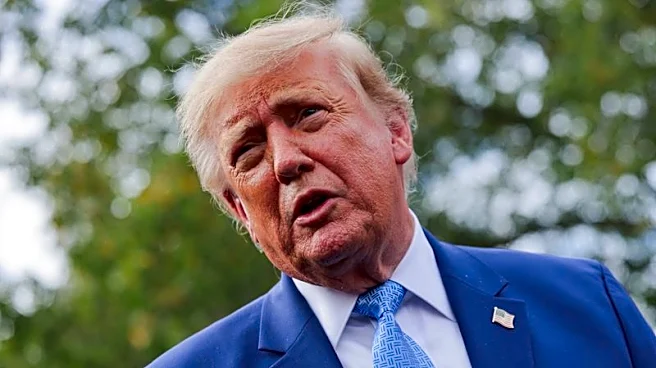
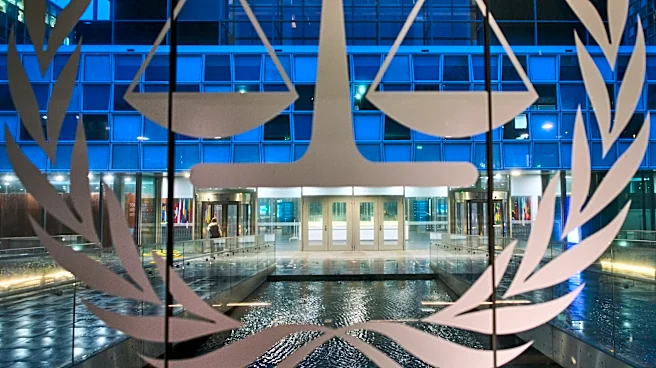
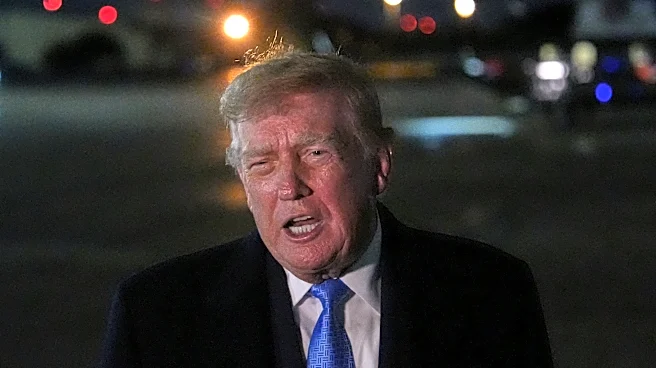
On September 30, 2026, the U.S. Court of International Trade is scheduled to hear arguments concerning global tariffs implemented by President Trump. These tariffs, ranging from 10% to 12.5%, apply to goods
from 80 countries, including major trading partners like China, India, and Japan. The administration justified these tariffs by asserting that these nations have failed to adequately police the use of forced labor in their supply chains, which the U.S. trade representative claims harms U.S. companies. This legal challenge marks President Trump's third attempt to impose such widespread tariffs, following two previous instances where similar measures were ruled unlawful, including a landmark Supreme Court decision earlier this year. The current tariffs are based on Section 301 of the Trade Act of 1974, which trade experts and lawyers view as a new guise for previously invalidated tariffs. Additionally, the United States continues to impose a 12.5% tariff on most Colombian exports due to non-compliance with forced labor standards, despite recent efforts by Colombia to address the issue.
Why It's Important?
This court case is significant as it challenges the executive branch's authority to impose broad tariffs under Section 301 of the 1974 Trade Act. Previous attempts by President Trump to levy global tariffs were struck down, highlighting the legal scrutiny surrounding such measures. The outcome will determine the extent to which a U.S. president can use trade laws to address issues like forced labor on a global scale, potentially setting a precedent for future trade policy. For U.S. businesses and consumers, these tariffs have led to increased prices, contributing to the Federal Reserve's decision to raise interest rates for the first time in three years, making loans and mortgages more expensive. Despite the tariffs, the U.S. trade deficit in goods has reportedly grown, not shrunk, and they have not spurred a manufacturing renaissance as intended. The legal battle could also impact international trade relations, as 59 countries and the European Union are affected by these duties.
What's Next?
The U.S. Court of International Trade will hear oral arguments on September 30, 2026. A ruling on the legality of President Trump's global tariffs could take weeks or even months. Regardless of the initial decision, either side has the option to appeal to the U.S. Court of Appeals for the Federal Circuit, which could also decide whether to pause the enforcement of the tariffs during the appeal process. The legal challenge could ultimately reach the Supreme Court, prolonging the battle for several more months. This ongoing legal scrutiny is critical, especially as tariffs remain a central component of President Trump's economic strategy. There is also an additional batch of Section 301 tariffs, based on the notion of countries with excess manufacturing capacity harming U.S. trade, that has not yet been finalized, indicating that further legal challenges related to tariffs are likely.
Beyond the Headlines
The legal challenge to President Trump's tariffs delves into the fundamental balance of power between the executive branch and Congress regarding trade authority. Critics argue that the administration has overreached its delegated authority under Section 301, which was originally intended for specific country disputes, not blanket tariffs on numerous trading partners. The case raises questions about the interpretation of trade laws and whether they can be broadly applied to address complex issues like forced labor without explicit congressional approval. The use of forced labor as a justification for tariffs also highlights ethical considerations in global supply chains and the U.S.'s role in enforcing labor standards internationally. The economic impact, including rising prices and an expanding trade deficit, suggests that the tariffs' effectiveness in achieving their stated goals is debatable, prompting a deeper examination of the long-term consequences of protectionist trade policies on the U.S. economy and its global standing.