



What's Happening?
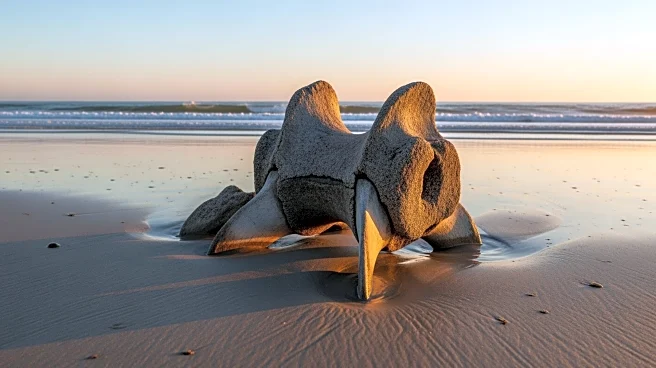
A 40-foot-long Sei whale carcass was discovered on Rockaway Beach in Queens, New York, on Thursday morning. The whale was initially spotted floating offshore, 15 miles south of Long Island, by an aerial survey team on Wednesday. The Atlantic Marine Conservation
Society, along with the NYC Department of Parks & Recreation, the NYS Department of Environmental Conservation, and NOAA Fisheries New England/Mid-Atlantic, are collaborating to secure and monitor the whale. Plans are underway to document the whale and conduct an autopsy to determine the cause of death. The Sei whale, classified as endangered, has seen its population decline due to historical commercial whaling. The New York Bight, the coastal area between New York City, Long Island, and the Jersey shore, reported 10 whale fatalities last year.
Why It's Important?
The discovery of the Sei whale carcass highlights ongoing concerns about marine life conservation and the health of ocean ecosystems. Sei whales are endangered, and their population has been significantly impacted by past commercial whaling activities. The presence of the carcass on a public beach underscores the need for effective conservation strategies and public awareness about marine life protection. The incident also draws attention to the broader issue of marine fatalities in the New York Bight area, which could be indicative of environmental stressors affecting marine species. Understanding the cause of death through the planned autopsy could provide insights into potential threats facing these marine mammals, informing future conservation efforts.
What's Next?
Authorities and conservationists will conduct an autopsy on the whale to determine the cause of death, which could reveal important information about environmental threats to marine life. The findings may prompt further investigation into the health of the marine ecosystem in the New York Bight. Additionally, the incident may lead to increased public and governmental focus on marine conservation efforts, potentially influencing policy decisions aimed at protecting endangered species like the Sei whale. The collaboration between various agencies highlights the importance of coordinated efforts in addressing marine conservation challenges.