



What's Happening?
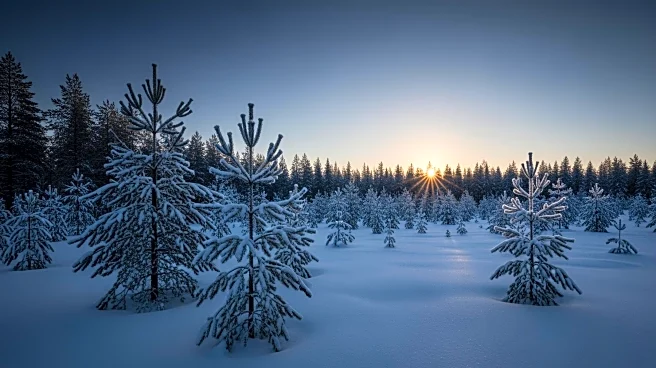
The Northern Hemisphere will officially enter winter on December 21, 2025, with the occurrence of the winter solstice. This astronomical event marks the shortest day and longest night of the year. The solstice results from the Earth's orbit around the Sun
and its axial tilt of 23.5 degrees. During this time, the Northern Hemisphere is tilted farthest from the Sun, leading to reduced sunlight and shorter days. Conversely, the Southern Hemisphere will experience the summer solstice, enjoying the longest day and shortest night. Historically, the winter solstice has been significant for ancient cultures, symbolizing the 'rebirth' of the Sun as days gradually lengthen afterward. Celebrations and ceremonies have been held at various historical sites, such as Stonehenge in England and Newgrange in Ireland, to mark this event.
Why It's Important?
The winter solstice is a pivotal moment in the astronomical calendar, influencing cultural and historical traditions worldwide. In the U.S., it signifies the official start of winter, impacting various sectors such as agriculture, energy, and retail. The solstice's arrival often prompts increased energy consumption due to longer nights and colder temperatures, affecting energy markets and policies. Additionally, it influences consumer behavior, with winter holidays and festivities driving retail sales. Understanding the solstice's impact on daylight and climate patterns is crucial for planning in sectors like agriculture, where crop cycles and livestock management are affected by seasonal changes.