







What's Happening?
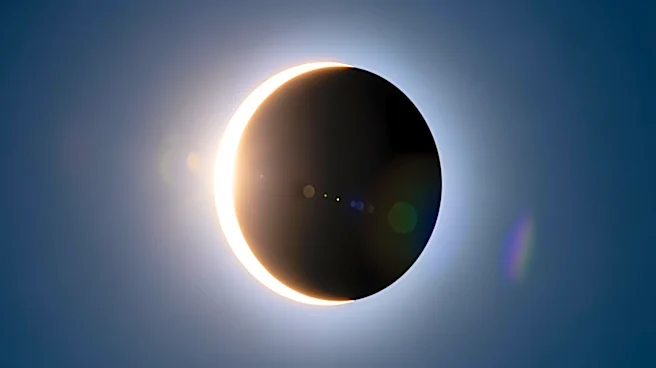
A powerful solar flare that erupted from the sun on May 10 has resulted in a coronal mass ejection (CME) heading towards Earth, increasing the likelihood of a Northern Lights display. According to space weather experts from NOAA and the UK Met Office,
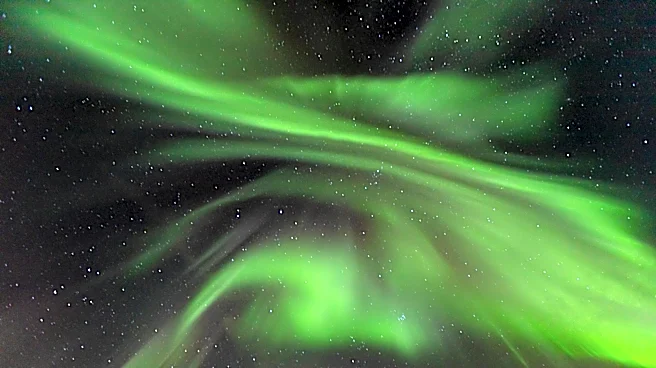
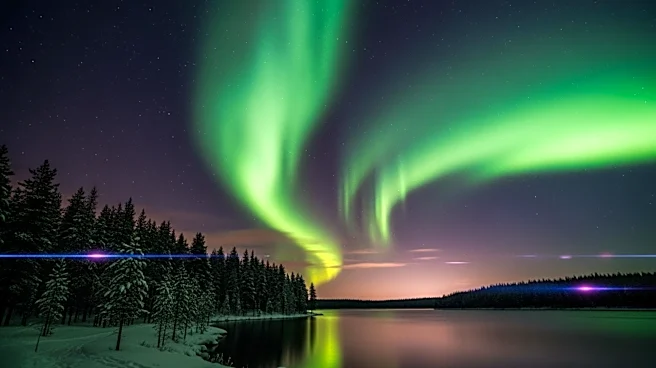
this cosmic event could trigger a weak geomagnetic storm, making the aurora visible from late May 12 into the early morning hours of May 13. The Northern Lights, known for their vibrant greens, purples, and blues, are expected to be visible across parts of Alaska, Canada, and the northern United States, including areas like northern Michigan and Maine. Observers are advised to check NOAA's 30-minute aurora forecast for real-time updates and to find a dark, rural location for optimal viewing.
Why It's Important?
The Northern Lights are a rare and spectacular natural phenomenon that captivates both scientists and the general public. This event provides a unique opportunity for people in the northern United States to witness the aurora, which is typically visible only in more northern latitudes. The occurrence of such geomagnetic storms also highlights the dynamic nature of space weather and its potential impacts on Earth's magnetic field. While the immediate effects are primarily visual, understanding these solar events is crucial for predicting and mitigating potential disruptions to satellite communications and power grids.
What's Next?
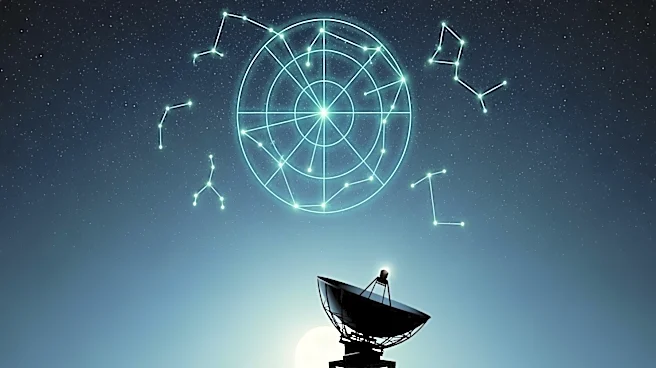
As the solar material continues to approach Earth, space weather experts will monitor the situation closely. If the geomagnetic storm intensifies, it could lead to more widespread auroral displays. Observers are encouraged to stay informed through space weather apps and forecasts. Additionally, scientists will likely analyze data from this event to improve predictive models for future solar flares and CMEs. The public's interest in such celestial events may also spur educational initiatives and increased awareness of space weather phenomena.