





What's Happening?
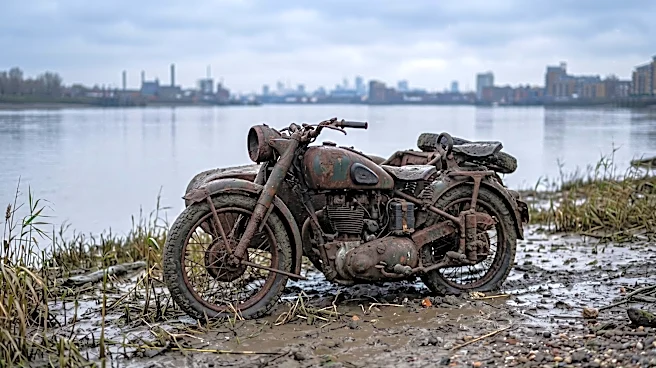
The German War Graves Commission announced the discovery of the remains of two German soldiers and a World War II-era Wehrmacht motorcycle, identified as a DKW NZ 350-1, in the Danube River in central Budapest. The motorcycle, heavily corroded but largely
intact due to preservation by harbor mud mixed with gas oil, was found this summer. Alongside the motorcycle, two well-preserved identification tags were recovered with the soldiers' remains. Typically, one half of such a tag was sent to the Wehrmacht Information Office to notify families, while the other remained with the fallen soldier. However, despite the intact tags, the identities of the soldiers remain unknown, as the presence of the tags does not definitively confirm ownership. The commission noted that the intact tags could suggest the soldiers were never officially accounted for after their deaths. The process of identification is described as painstaking, involving analysis of the remains and personal belongings, followed by comparison with military records.
Why It's Important?
This discovery holds significant historical importance, offering a tangible link to the events and human cost of World War II. The well-preserved nature of the motorcycle and identification tags provides valuable archaeological and historical data, potentially shedding light on specific military movements or incidents in the region during 1944, the year etched into the motorcycle. For the German War Graves Commission, the identification of these soldiers is a crucial part of their mission to provide closure to families and accurately document war casualties. The ongoing mystery surrounding their identities underscores the challenges of accounting for those lost in conflict, even decades later. The find also serves as a poignant reminder of the widespread impact of the war, with relics and remains still emerging from unexpected locations, prompting renewed efforts to understand and honor the past.
What's Next?
The German War Graves Commission will continue its meticulous process to identify the two German soldiers. This involves deciphering the information on the recovered identification tags, analyzing the remains for clues such as height, age, and possible origin, and examining any personal belongings found. These findings will then be cross-referenced with military records from the German Federal Archives in Berlin. The ultimate goal is to clarify the soldiers' fates and, if successful, to reach out to any potential relatives. The commission acknowledges that this can be a lengthy and complex endeavor, as the circumstances of their deaths—whether they attempted to cross a frozen Danube, fell, were shot, or drowned—remain speculative until further identification is made.
Beyond the Headlines
The discovery transcends a mere historical artifact find, touching upon themes of memory, loss, and the enduring impact of war. The fact that these remains and a military vehicle lay submerged for over 80 years highlights how historical narratives can be incomplete and how new evidence can continually emerge, reshaping our understanding of past events. The painstaking efforts to identify the soldiers underscore a universal human desire for closure and recognition for those who perished in conflict. Furthermore, the preservation of the motorcycle due to specific environmental conditions in the Danube offers insights into taphonomy and the long-term survival of materials in aquatic environments, which could be relevant for future archaeological endeavors. The ongoing mystery surrounding their identities also serves as a powerful symbol of the countless unknown soldiers from various conflicts whose stories remain untold.