







What's Happening?
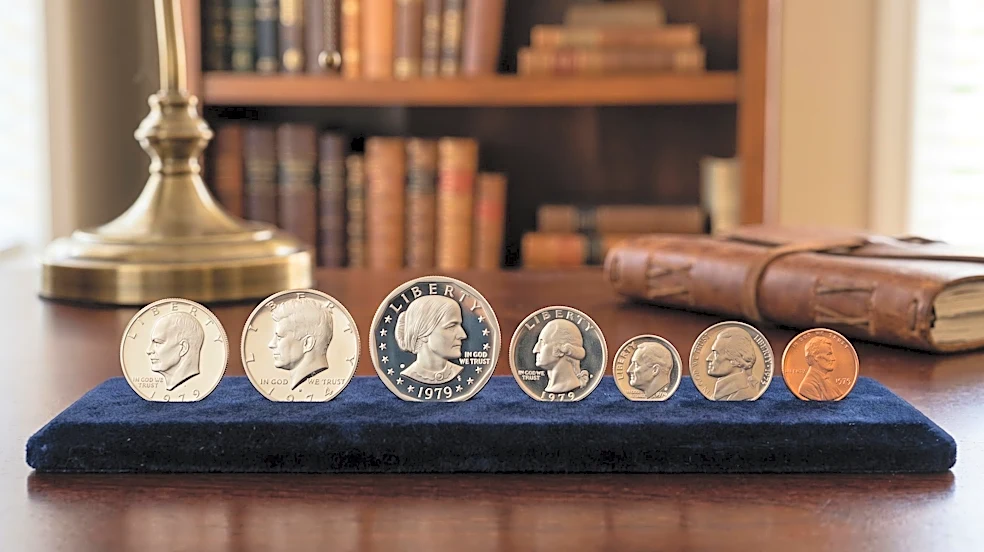
The US Mint in San Francisco produced a limited-edition 1979 Proof Set, which includes six proof coins. This set is notable for featuring the first Susan B. Anthony Dollar. Proof coins are manufactured using a specialized process where dies and planchets
are polished before striking, resulting in a mirrored field and a frosted image. Each coin is struck twice to achieve a sharper design and rims. The coins in this particular set, including the Susan B. Anthony Dollar, Kennedy Half Dollar, Washington Quarter, Roosevelt Dime, Jefferson Nickel, and Lincoln Cent, all bear the small 'S' mintmark, indicating their origin from the San Francisco Mint. The Susan B. Anthony Dollar, introduced in this set, was intended to replace the larger Eisenhower Dollar but faced challenges due to its similar size to the quarter, leading to public confusion and a production run of only four years. Each proof set is produced for only one year, making the supply limited.
Why It's Important?
The production of the 1979 Proof Set by the US Mint in San Francisco holds significance for coin collectors and numismatists due to its limited annual release and the unique characteristics of proof coinage. The specialized minting process, which involves polishing dies and planchets and striking coins twice, results in a higher quality and aesthetically distinct product compared to standard circulation coins. This meticulous production enhances the collectible value and desirability of these sets. Furthermore, the inclusion of the Susan B. Anthony Dollar in this set marks a historical moment in U.S. coinage. Despite its short production run, the Susan B. Anthony Dollar represents an attempt to introduce a smaller, lighter dollar coin into circulation, reflecting broader efforts to modernize currency. The challenges it faced, primarily due to its resemblance to the quarter, highlight the complexities of public acceptance and practical utility in currency design. For collectors, these sets offer a tangible piece of U.S. monetary history, showcasing both innovative design and the practical difficulties encountered in its implementation.
What's Next?
While the 1979 Proof Set is a historical item, its continued presence in the secondary market means that collectors will likely continue to seek out and trade these sets. The limited mintage of 3,677,175 sets ensures their scarcity, which can influence their value over time. For the US Mint, the experience with the Susan B. Anthony Dollar likely informed future currency designs and public outreach efforts for new coin introductions. Future proof sets from the US Mint will continue to be produced annually, maintaining the tradition of high-quality collectible coinage. These future sets will also likely feature new designs or commemorative issues, continuing to attract collectors. The ongoing demand for such historical and specially minted coins underscores the enduring interest in numismatics and the role of the US Mint in preserving and presenting American history through its currency.
Beyond the Headlines
The story of the 1979 Proof Set and the Susan B. Anthony Dollar extends beyond mere coin production, touching upon broader themes of design, public perception, and the evolution of currency. The meticulous process of creating proof coins reflects a commitment to craftsmanship and artistic expression within the utilitarian realm of money. This dedication elevates coins from simple transactional tools to miniature works of art and historical artifacts. The challenges faced by the Susan B. Anthony Dollar, despite its innovative intent, illustrate the critical role of public acceptance in the success of new currency. Its confusion with the quarter highlights how deeply ingrained habits and visual cues influence daily interactions with money. This episode serves as a case study in the intersection of design, public psychology, and economic policy, demonstrating that even well-intentioned changes can falter without careful consideration of user experience. The enduring collectibility of these sets also speaks to a cultural appreciation for history and tangible heritage, transforming everyday objects into cherished possessions.