




What's Happening?
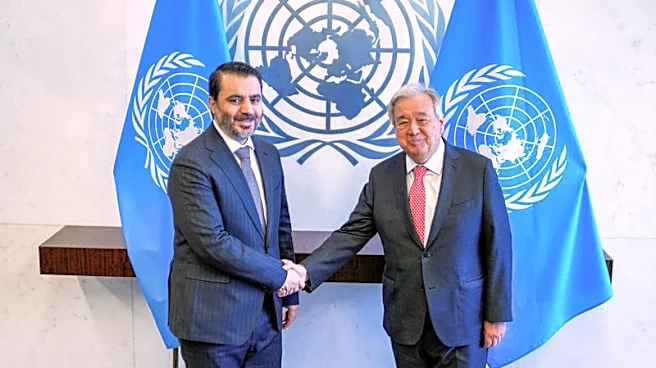
United Nations Secretary-General Antonio Guterres has arrived in Damascus, marking the first visit by a U.N. chief to Syria in 17 years. This visit comes as Syria emerges from a decade-long civil war that resulted in significant loss of life and infrastructure
damage. Guterres is urging the international community to support Syria's recovery and reconstruction efforts under the new government led by President Ahmad al-Sharaa, who took power following the ousting of Bashar Assad in December 2024. During his visit, Guterres met with Syrian officials, toured historic sites, and emphasized the U.N.'s commitment to aiding Syria in building a stable and inclusive future. The visit also highlights renewed international engagement with Syria and the challenges the country faces, including the presence of Israeli forces in southern Syria and ongoing humanitarian needs.
Why It's Important?
Guterres' visit underscores the international community's interest in stabilizing Syria and supporting its reconstruction efforts. The U.N.'s involvement is crucial in ensuring that Syria's recovery is inclusive and addresses the needs of its diverse population. The visit also signals a shift from crisis management to direct engagement, which could lead to more effective support for rebuilding democratic institutions and addressing humanitarian challenges. The presence of Israeli forces and ongoing military operations in southern Syria remain contentious issues that could impact regional stability. The international community's response to Guterres' call for support will be pivotal in determining Syria's path towards recovery and reintegration into the global community.
What's Next?
The U.N. is expected to continue its engagement with Syria, focusing on supporting the country's reconstruction and addressing humanitarian needs. Guterres' visit may lead to increased international aid and collaboration with the Syrian government to rebuild infrastructure and strengthen national institutions. The situation in southern Syria, particularly the presence of Israeli forces, will require ongoing diplomatic efforts to ensure regional stability. The U.N. and international partners will likely monitor the implementation of inclusive governance and the protection of human rights as Syria rebuilds. The success of these efforts will depend on the international community's willingness to provide sustained support and address the complex challenges facing Syria.