
What's Happening?
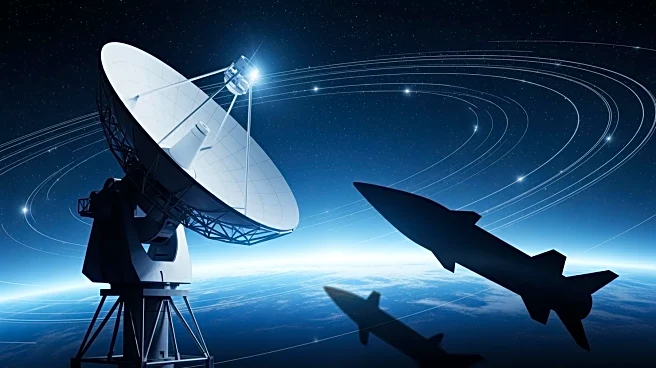
Intelligence services from two NATO nations suspect that Russia is developing a new anti-satellite weapon aimed at targeting Elon Musk's Starlink satellite constellation. The weapon, referred to as a 'zone-effect'
system, would potentially release clouds of high-density pellets into orbit, disabling multiple satellites simultaneously. This development is seen as an attempt to counter Western space superiority, which has been instrumental in supporting Ukraine's defense efforts. Analysts express skepticism about the feasibility of such a weapon, citing the potential for uncontrollable chaos in space that could affect not only Western satellites but also those of Russia and its allies, including China. Despite these concerns, the Canadian military's Space Division acknowledges the possibility of such developments, given Russia's history of pursuing space-based weaponry.
Why It's Important?
The potential development of an anti-satellite weapon by Russia could have significant implications for global space security and the ongoing conflict in Ukraine. Starlink has been crucial for Ukraine, providing high-speed internet for military and civilian communications. If Russia were to deploy such a weapon, it could disrupt these communications, impacting Ukraine's defense capabilities. Additionally, the deployment of such a weapon could lead to widespread space debris, threatening the safety and functionality of numerous satellites, including those used for global communications and navigation. This development underscores the growing militarization of space and the need for international regulations to prevent the weaponization of space.
What's Next?
The international community may need to address the potential threat posed by such weapons through diplomatic channels and possibly through the United Nations. Countries reliant on satellite technology for communication and defense may increase their investments in counter-space capabilities to protect their assets. The U.S. and its allies might also consider enhancing their space surveillance and debris tracking systems to mitigate the risks posed by potential space debris. Furthermore, this development could lead to increased tensions between Russia and Western nations, potentially impacting diplomatic relations and international cooperation in space exploration.
Beyond the Headlines
The ethical implications of developing and potentially deploying such a weapon are significant. The indiscriminate nature of the proposed weapon could lead to collateral damage affecting civilian and commercial satellites, raising questions about the responsible use of space technology. Additionally, the potential for space debris to impact other nations' satellites highlights the interconnected nature of space activities and the need for collaborative efforts to ensure the sustainability of space operations. This situation may prompt discussions on the establishment of international norms and treaties to govern the use of space-based weapons.