


What's Happening?
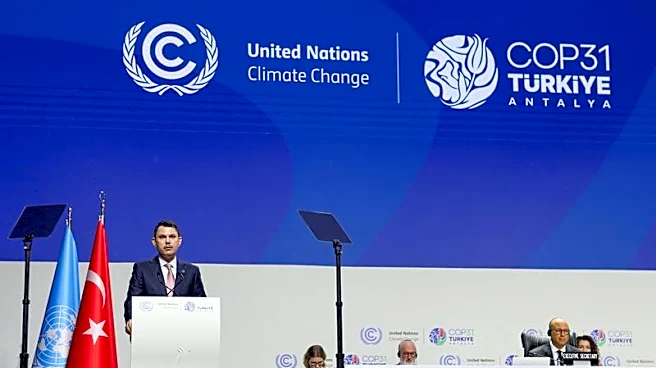
COP31, the thirty-first Conference of the Parties on climate change, is taking place in Antalya, Turkey, from November 9 to 20, with a significant focus on the ocean. This marks a notable shift, as the ocean has historically been on the periphery of climate negotiations.
The Turkish presidency has dedicated a specific agenda to oceans and seas, prioritizing blue carbon ecosystems, coastal ecosystem resilience, ocean observation and data partnerships, and support for vulnerable coastal communities. This emphasis follows the first ministerial meeting devoted to the ocean at COP30 and the Blue NDC Challenge, which encourages countries to integrate ocean protection into their national climate plans. The conference aims to translate ocean-climate ambition into practical action, particularly in the Mediterranean, which is experiencing record marine heatwaves and increased acidity.
Why It's Important?
The increased integration of the ocean into the COP31 agenda holds significant importance for the U.S., a nation with extensive coastlines and substantial maritime interests. The U.S. is vulnerable to the impacts of climate change on oceans, including sea-level rise, extreme weather events, and disruptions to marine ecosystems that support critical industries like fishing and tourism. By participating in and influencing these discussions, the U.S. can advocate for policies that protect its coastal communities and economic assets. The focus on blue carbon ecosystems and coastal resilience offers opportunities for the U.S. to share its expertise and adopt best practices in managing its own coastal resources. Furthermore, international cooperation on ocean observation and data partnerships can enhance the U.S.'s ability to monitor and predict ocean changes, informing national climate adaptation and mitigation strategies. The outcomes of COP31 could shape future global climate action, directly impacting U.S. environmental policy and economic planning.
What's Next?
COP31 in Antalya will continue until November 20, with ongoing events and discussions aimed at strengthening the integration of the ocean into climate action. Key events include sessions to build momentum toward the 12th Our Ocean Conference and discussions on the importance of ocean observing for society, climate, and nature. The COP31 Presidency is focused on implementation, with 'Oceans and Seas' identified as a priority for strengthening marine and coastal resilience. The hope is that the conference will produce agreements commensurate with the scale of the problem, leading to concrete and courageous actions for sea protection. It remains to be seen whether the ocean will be prominently featured in the leaders' final declaration, how many countries will table climate plans with specific commitments for the sea, and if sufficient funding will be allocated for ocean protection.
Beyond the Headlines
The elevation of the ocean to a central theme at COP31 signifies a growing global recognition of the intrinsic link between ocean health and climate stability. This shift challenges the historical compartmentalization of environmental issues and underscores the scientific consensus that a healthy ocean is indispensable for a stable climate. The concept of a 'Blue COP' suggests a paradigm shift in climate negotiations, moving beyond terrestrial-centric approaches to embrace the vast and critical role of marine environments. This development could lead to a more holistic approach to climate policy, influencing how nations, including the U.S., allocate resources, develop technologies, and foster international partnerships. It also highlights the ethical dimension of protecting marine biodiversity and the livelihoods of coastal communities, emphasizing that climate action is not just an environmental issue but also a matter of social justice and economic equity.