

What's Happening?
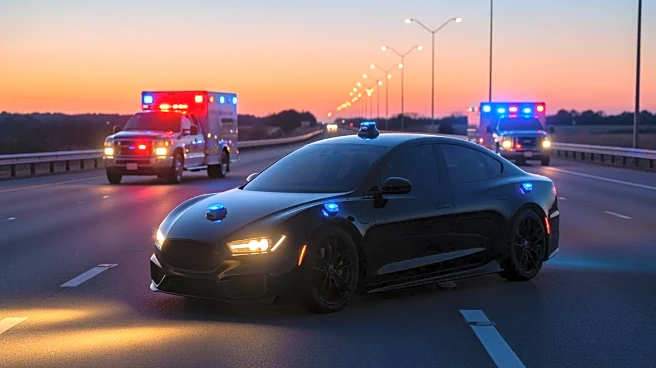
A Waymo autonomous vehicle blocked an ambulance responding to a shooting in Austin, Texas, where a gunman fatally wounded three people and injured 15 others. The incident, captured in a viral video, occurred in the city's nightlife district on West 6th
Street. Although the blockage did not significantly delay emergency response, it has intensified public debate over the readiness of self-driving cars on public roads. Local emergency officials managed to move the vehicle within two minutes, but the event has highlighted ongoing concerns about the integration of autonomous vehicles in urban settings. Despite evidence suggesting that autonomous vehicles are generally safer than human drivers, critics argue that the technology is not yet ready for widespread deployment.
Why It's Important?
The incident underscores the challenges and public apprehension surrounding the deployment of autonomous vehicles in urban areas. As self-driving technology becomes more prevalent, incidents like this could influence public policy and regulatory frameworks. The Texas Department of Motor Vehicles is set to implement new regulations in May, requiring autonomous vehicle operators to certify their compliance with traffic laws. This event may accelerate discussions on how to ensure that autonomous vehicles do not impede emergency services. The broader implications for the autonomous vehicle industry include potential delays in adoption and increased scrutiny from both regulators and the public.
What's Next?
Texas will soon require autonomous vehicle operators to obtain authorization from the state Department of Motor Vehicles, which includes certifying that their vehicles comply with traffic laws. This regulatory framework aims to address safety concerns and ensure that autonomous vehicles do not obstruct emergency services. Companies like Waymo are expected to continue refining their technology and protocols to prevent similar incidents. The outcome of these regulatory changes and technological improvements will likely influence the pace at which autonomous vehicles are integrated into public transportation systems.