



What's Happening?
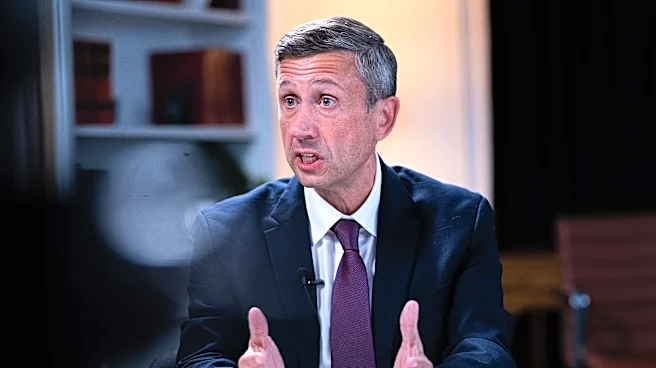
Former Senator Joe Manchin is spearheading an initiative to support independent candidates in the upcoming 2026 midterm elections. Amid growing dissatisfaction with both the Democratic and Republican parties, Manchin has launched the Independent Leadership
Council. This effort aims to provide a platform for candidates who do not align with the traditional two-party system. Recent polls indicate that both major parties are facing low favorability ratings, with independents viewing Democrats slightly more favorably than Republicans. Manchin, who served as a Democrat before becoming an independent, is working to recruit and support candidates like Seth Bodnar in Montana and Michael Bridgford in Iowa. Despite historical challenges faced by independent candidates in U.S. elections, Manchin believes there is an opportunity for independents to make significant gains, especially in states where one of the major parties is not fielding a candidate.
Why It's Important?
The initiative led by Joe Manchin highlights a significant shift in the political landscape, where voter dissatisfaction with the two-party system is at a high. This movement could potentially alter the dynamics of the midterm elections, offering voters alternatives to the traditional Democratic and Republican candidates. If successful, it could pave the way for more independent voices in Congress, potentially influencing legislative priorities and breaking the current partisan gridlock. However, the structural challenges of the U.S. electoral system, which favors a two-party system, remain a significant hurdle for independent candidates. The success of this initiative could signal a broader acceptance of independent candidates and a shift towards a more diverse political representation.
What's Next?
The Independent Leadership Council will focus on recruiting candidates, raising funds, and building campaign infrastructure in the lead-up to the 2026 midterm elections. The effectiveness of this initiative will be tested as the elections approach, with independent candidates competing in key races across several states. Observers will be watching closely to see if voter dissatisfaction with the major parties translates into electoral success for independents. The outcome of these efforts could influence future election strategies and the viability of independent candidates in U.S. politics.