









What's Happening?
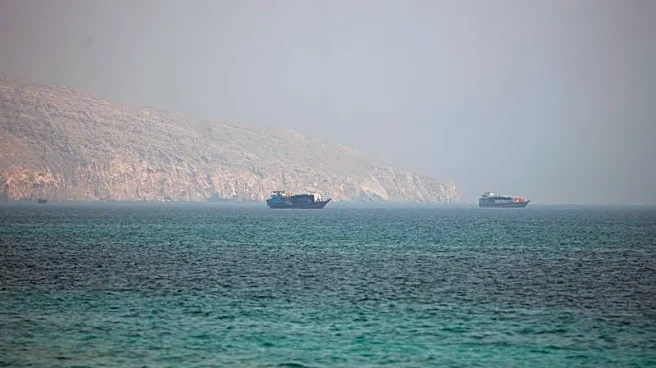
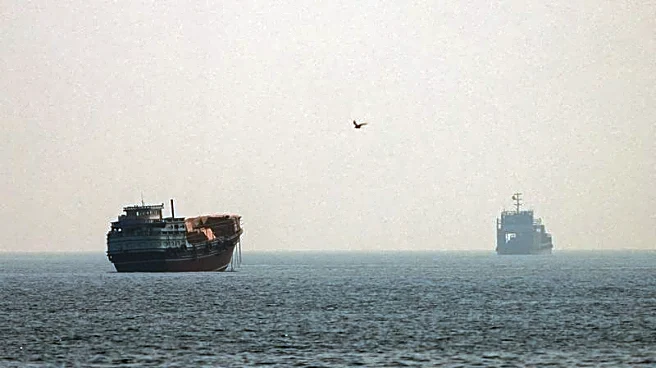
Oil prices have surged by more than 3% following renewed military strikes between the United States and Iran. This escalation has reignited concerns over the security of energy shipments through the Strait of Hormuz, a critical chokepoint for global oil
and liquefied natural gas supplies. The conflict has led to a significant increase in Brent crude and West Texas Intermediate crude prices. The recent military actions include Iran targeting U.S. facilities across the Gulf and claiming to have closed the Strait of Hormuz, although President Trump stated that it remains open to commercial traffic. The situation has cast doubt on a recent interim agreement between the U.S. and Iran aimed at reopening the strait and ending hostilities. Despite a rise in global oil supply following the agreement, it remains below pre-conflict levels.
Why It's Important?
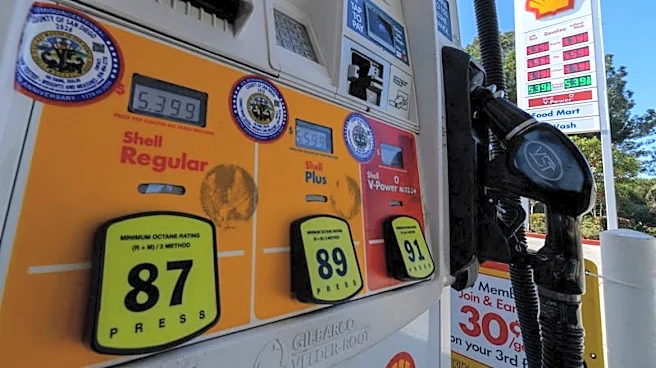
The renewed conflict between the U.S. and Iran and the potential closure of the Strait of Hormuz have significant implications for global energy markets. The strait is a vital passage for about one-fifth of the world's oil supply, and any disruption could lead to increased volatility in oil prices, affecting economies worldwide. The situation also highlights the geopolitical risks associated with energy supply routes and the potential for further escalation in the region. The increased oil prices could impact various sectors, including transportation and manufacturing, leading to higher costs for consumers and businesses. Additionally, the conflict may influence future diplomatic relations and negotiations between the U.S. and Iran, with potential repercussions for international trade and security.
What's Next?
The focus will be on the responses from the U.S. government and other international stakeholders. Any official actions or statements could influence future market movements and geopolitical dynamics. There is also potential for further negotiations with Iran or changes in the naval blockade, which could alter the current situation. The expansion of pipeline capacity in the Middle East, as forecasted by Goldman Sachs, may provide a long-term solution to bypass the Strait of Hormuz, reducing the impact of such conflicts on global oil supply. However, the immediate future remains uncertain, with the potential for further military actions and diplomatic efforts to resolve the conflict.