
What's Happening?
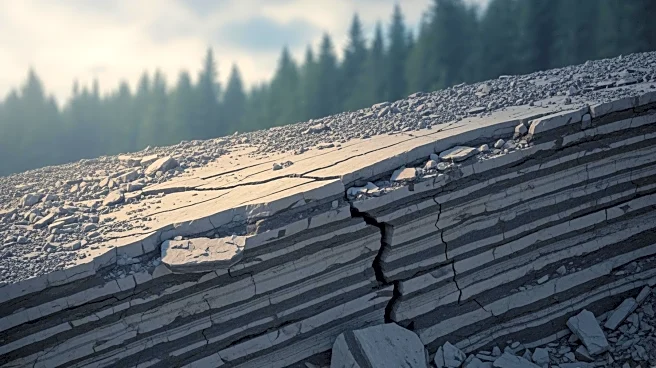
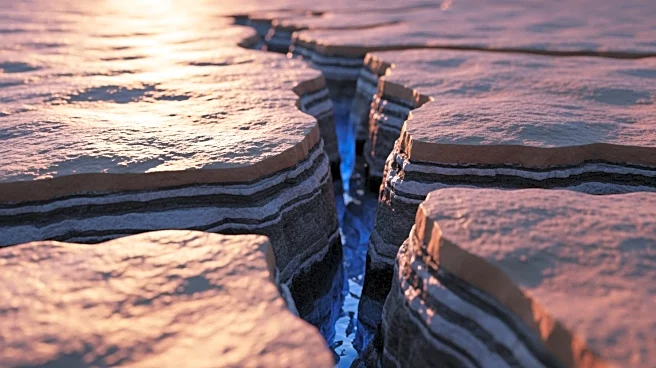
Recent geological research indicates that Africa is undergoing a slow tectonic split along the East African Rift (EAR), which could eventually lead to the formation of a new ocean. The EAR is a significant
geological feature where the Somalian plate is gradually separating from the larger Nubian plate. This process is occurring at a rate of a few millimeters per year and is expected to take tens of millions of years to complete. The rift system, which also involves the Arabian plate, forms a Y-shaped structure intersecting at the Afar region in Ethiopia, known as a 'triple junction.' This area is one of the few places on Earth where three tectonic rifts meet, contributing to the unique geological activity observed there.
Why It's Important?
The slow tectonic movements in the East African Rift have significant implications for the region and beyond. While the complete formation of a new ocean is millions of years away, the ongoing geological activity can have immediate impacts, such as increased seismic and volcanic activity, which could affect local populations. Understanding these processes is crucial for geologists and policymakers to anticipate and mitigate potential natural disasters. Additionally, the study of such tectonic movements provides valuable insights into Earth's geological history and the dynamic nature of its crust, which can inform broader scientific research and education.
What's Next?
As the tectonic plates continue to move, scientists will likely focus on monitoring seismic and volcanic activity in the region to better understand the risks and prepare for potential natural disasters. Further research may also explore the implications of these geological changes on local ecosystems and human settlements. International collaboration among geologists and researchers will be essential to advance the understanding of these complex processes and to develop strategies for mitigating their impacts.
Beyond the Headlines
The geological changes in the East African Rift highlight the dynamic nature of Earth's crust and the long-term processes that shape our planet. This ongoing tectonic activity serves as a reminder of the interconnectedness of geological and environmental systems. It also underscores the importance of investing in scientific research and technology to monitor and understand these natural phenomena, which can have profound implications for global geological knowledge and environmental policy.