

What's Happening?
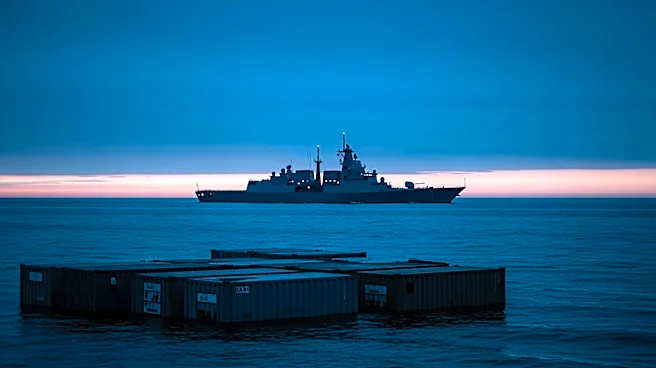
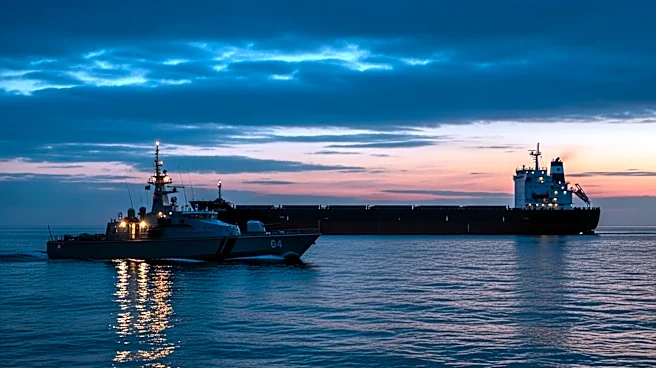
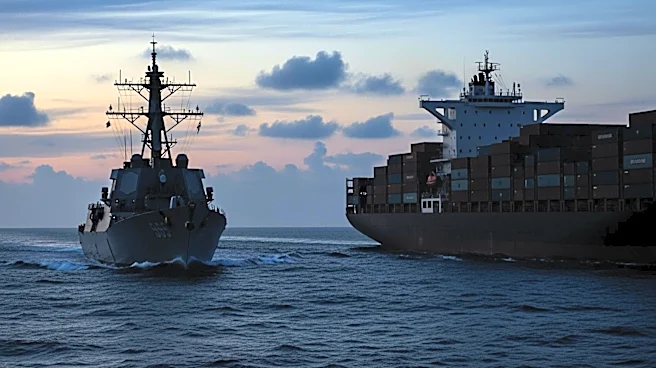
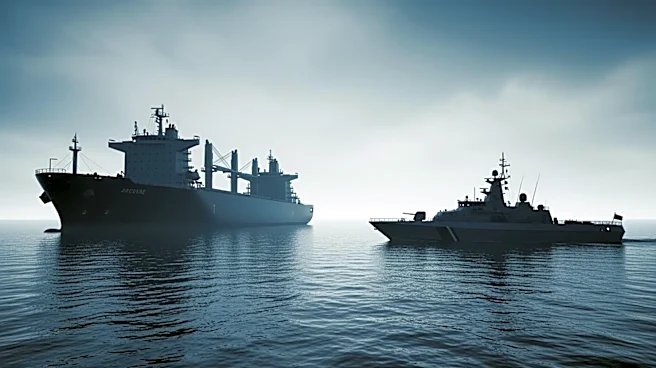
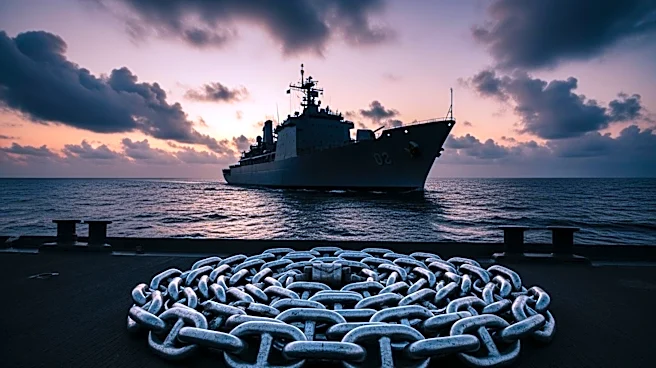
A U.S. Navy destroyer, the USS Spruance, intercepted and fired upon the Iranian-flagged cargo vessel M/V Touska in the Arabian Sea. The incident occurred as the vessel attempted to breach a naval blockade of Iranian ports. The U.S. Central Command reported
that the Touska was warned repeatedly over a six-hour period before the destroyer disabled its propulsion by firing into the engine room. The vessel, now in U.S. custody, was boarded by U.S. Marines. The blockade, involving significant U.S. military resources, was implemented following failed peace talks between the U.S. and Iran. Iran has threatened retaliation, escalating tensions in the region.
Why It's Important?
This incident highlights the ongoing geopolitical tensions between the U.S. and Iran, with potential implications for international trade and regional stability. The blockade aims to restrict Iran's oil exports, impacting global oil markets and potentially leading to increased prices. The U.S. action underscores its commitment to enforcing sanctions and maintaining pressure on Iran, which could lead to further diplomatic and military confrontations. The situation also affects U.S. relations with allies and partners in the region, who may be drawn into the conflict.
What's Next?
Iran has vowed to retaliate, which could lead to further military engagements in the region. The U.S. may face diplomatic challenges as it seeks to justify its actions and maintain international support for its blockade. The incident could also impact upcoming peace talks, with Iran potentially using the blockade as leverage in negotiations. The U.S. will likely continue to monitor and enforce the blockade, potentially leading to more confrontations with vessels attempting to breach it.