





What's Happening?
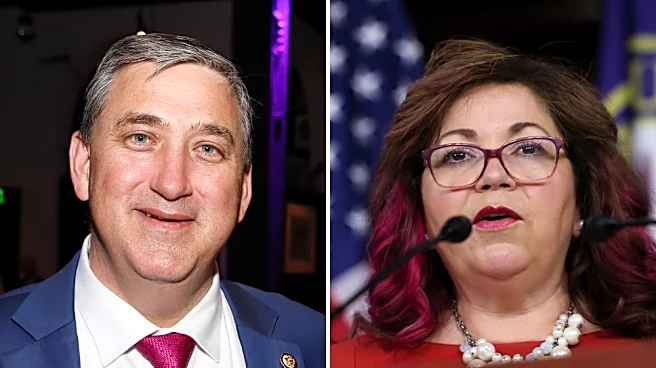
Representative Nanette Barragán (D-Calif.) has expressed significant frustration regarding the lack of clarity on the rollout of state grants under the Digital Equity Act. This concern arises after a federal judge delivered a mixed ruling on the program,
which aims to expand internet skills and access across the U.S. The judge partially sided with digital equity advocates by preventing President Trump from unilaterally canceling the multibillion-dollar grant program. However, the ruling also deemed it unconstitutional for the government to use race or ethnicity as a basis for awarding funds under the program. This decision has left states and organizations in limbo, particularly concerning how the grants will be administered without racial classifications. Barragán's questioning during a House committee hearing highlighted the need for clear answers and a path forward for communities awaiting these crucial funds. The National Telecommunications and Information Administration (NTIA), which oversees the program, has declined to provide specific details, citing active litigation.
Why It's Important?
The Digital Equity Act, part of President Biden’s infrastructure law, is critical for addressing the digital divide in the U.S., particularly in low-income, rural, and tribal communities. The judicial ruling and subsequent uncertainty about grant distribution could significantly impede efforts to provide internet access and digital literacy skills to underserved populations. The program's original intent was to benefit various groups, including low-income households, older people, rural Americans, veterans, and racial or ethnic minority groups, who often face disproportionate barriers to internet access. The removal of race and ethnicity as criteria for grant awards, while legally mandated by the court, raises questions about how effectively the program can target and address historical disparities in digital access. This situation impacts numerous organizations and communities that rely on these grants to fund digital navigator programs, which teach essential technology and internet skills, thereby affecting economic opportunities, healthcare access, and overall quality of life for millions of Americans.
What's Next?
Following the federal judge's decision, federal attorneys have indicated that the competitive grant program will be reinstated without racial classification, with a new grant application expected to be released in December. The National Digital Inclusion Alliance (NDIA), which filed the lawsuit, will need to reapply for its grant award. Court proceedings have been paused to allow the NTIA time to reinstate the competitive grant program, and the NDIA has proposed monthly status reports to ensure prompt action. However, the broader implications for state capacity grants, such as the $70 million awarded to California, remain unclear, as the Justice Department has also asserted that these state grants are illegally based on race. Lawmakers like Representative Barragán will likely continue to press for transparency and a clear implementation strategy from the NTIA to ensure that the Digital Equity Act's objectives are met, despite the legal constraints on racial classifications.
Beyond the Headlines
This development underscores the complex interplay between legislative intent, judicial review, and executive branch implementation, particularly concerning programs designed to address societal inequities. The ruling highlights the ongoing legal and political debate surrounding race-conscious policies in federal programs, echoing the Supreme Court's decision on affirmative action in higher education. While the court's decision aims to ensure equal treatment under the law, it inadvertently complicates efforts to address deeply entrenched disparities that often correlate with racial and ethnic lines. The challenge now lies in designing and implementing digital equity programs that can effectively reach and uplift historically marginalized communities without explicitly using racial classifications, potentially requiring more nuanced targeting strategies based on socioeconomic factors or geographic location. This situation could set a precedent for how future federal programs addressing inequality are structured and defended against legal challenges.