


What's Happening?
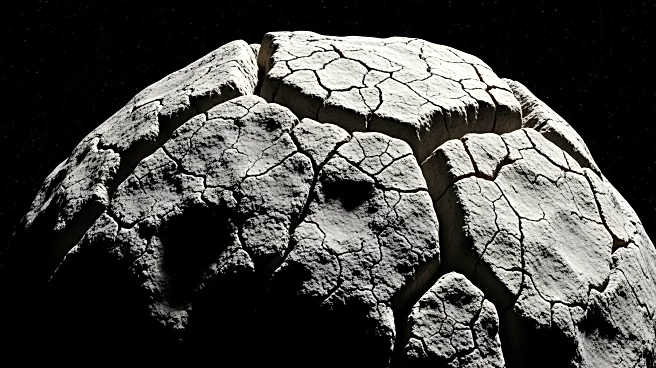
NASA has released X-ray computed tomography (XCT) scans of asteroid Bennu, providing insights into the crack networks within its samples. These scans have helped solve a mystery that puzzled scientists since the OSIRIS-REx spacecraft's approach to Bennu in 2018.
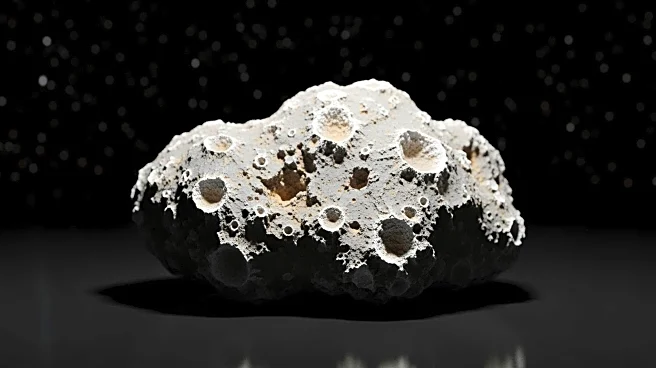
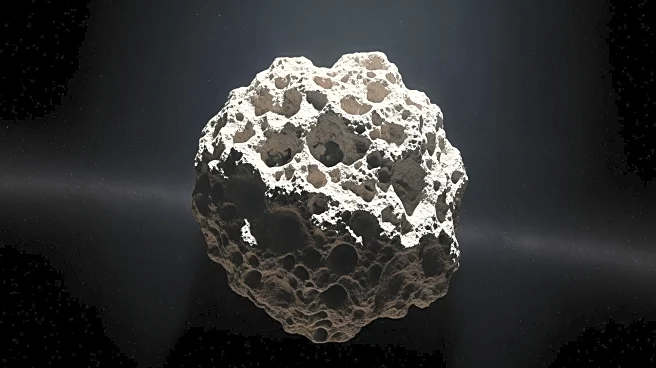
Initially, Bennu was expected to have smooth, sandy surfaces, but the spacecraft discovered it was covered in boulders. Observations from NASA's Spitzer Space Telescope in 2007 indicated low thermal inertia, suggesting a surface that heats and cools rapidly, akin to a sandy beach. This was inconsistent with the boulders found, which should retain heat longer. The data from OSIRIS-REx suggested the boulders might be more porous than anticipated, a hypothesis confirmed by the XCT scans once samples were brought to Earth.
Why It's Important?
The findings from Bennu are significant for understanding asteroid composition and behavior, which has implications for planetary defense and future space missions. The discovery of porous boulders challenges previous assumptions about asteroid surfaces, potentially altering how scientists predict asteroid interactions with spacecraft. This knowledge is crucial for planning future missions that may involve landing on or extracting resources from asteroids. Additionally, understanding the thermal properties of asteroids can inform strategies for deflecting potentially hazardous asteroids that might threaten Earth.
What's Next?
NASA will continue to analyze the samples from Bennu to further understand its composition and structure. These studies will contribute to the broader field of asteroid research, aiding in the development of technologies for asteroid mining and planetary defense. The insights gained may also influence the design of future spacecraft intended for asteroid exploration, ensuring they are equipped to handle unexpected surface conditions.
Beyond the Headlines
The revelation about Bennu's boulders highlights the importance of direct sample analysis in space exploration. It underscores the limitations of remote sensing and the need for physical samples to verify hypotheses. This case exemplifies the evolving nature of scientific understanding, where initial observations can be overturned by new data, emphasizing the dynamic and iterative process of scientific discovery.